
The easiest Camino de Santiago depends on your fitness level, the number of days you have available, and the kind of experience you’re looking for. Whether this is your first pilgrimage or you’d prefer a walk with fewer difficulties, it’s important to know the distances, the type of terrain, and the effort each route requires.
Although there’s no single ideal route for everyone, there are more accessible options for those who want to walk at a relaxed pace, without facing big changes in elevation or overly demanding stages.
Table of Contents
The most accessible routes for walking the Camino de Santiago
For many pilgrims, the Central Portuguese Way, starting in Tui, is one of the most accessible options. The route covers about 120 kilometers to Santiago de Compostela and can be split into several stages to suit each person’s fitness.
In addition, it combines rural paths, small towns, and urban stretches, without requiring mountain hiking experience. However, there are climbs, uneven terrain, and long stages, so it’s important to prepare for the trip.
Central Portuguese Way, starting in Tui
This is a popular choice for those looking for a first experience on the Camino de Santiago. At roughly 120 kilometers to the destination, it can be completed in about five to six days, although the time varies with the length of the stages.
Portuguese Coastal Way
For those who prefer to walk along the Atlantic, this route offers coastal scenery and boardwalks, and passes through several towns. The distance depends on your starting point: you can begin in Porto and head toward Santiago de Compostela.
French Way, starting in Sarria
The route between Sarria and Santiago de Compostela is one of the most popular choices for those who have only a few days to spare. It is approximately 115 kilometers long and allows pilgrims to obtain the Compostela, provided they meet the official requirements for the pilgrimage.
Read also: How Can You Prepare Physically and Mentally for the Camino de Santiago?
How do you choose a route based on your fitness level?
The ideal route doesn’t depend only on the total distance. How you spread the kilometers across the days also affects your effort and recovery.
If you have no hiking experience, start by planning shorter stages of about 15 to 20 kilometers a day, and adjust the distance to your fitness level. Also consider the weight of your backpack, the type of footwear, and the time of year.
How many days does it take to walk the Camino de Santiago?
The time you need depends on the route you choose, the starting point, and your walking pace. As a guide, the Central Portuguese Way, starting in Tui, and the French Way, starting in Sarria, can be completed in about five to six days. The Portuguese Coastal Way, starting in Porto, on the other hand, may take eleven to thirteen days.
These times are only estimates. If you prefer to walk at a leisurely pace, set aside more time to rest, visit the towns, and recover between stages.
Tips to make your pilgrimage easier
Regardless of the route, taking a few precautions can help reduce the physical strain and make the experience more comfortable.
- Train before you leave: go for regular walks and gradually increase the distance.
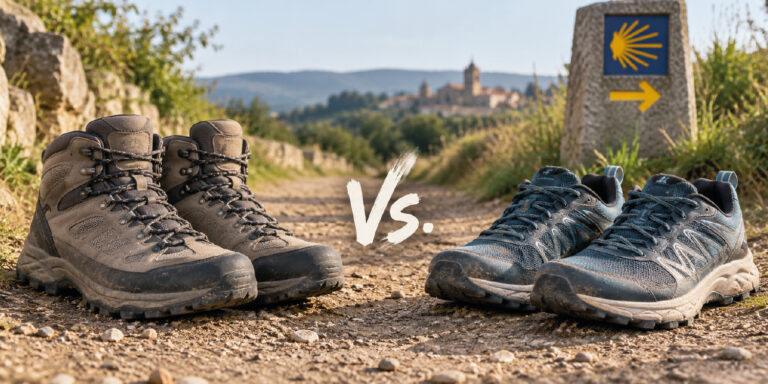
- Choose comfortable footwear: wear boots or hiking shoes that are already broken in.
- Pack only the essentials: a backpack that’s too heavy will make you more tired.
- Take regular breaks: use them to drink water, eat, and rest.
- Adjust your pace: you don’t need to keep up with other pilgrims or tackle stages that are too long.
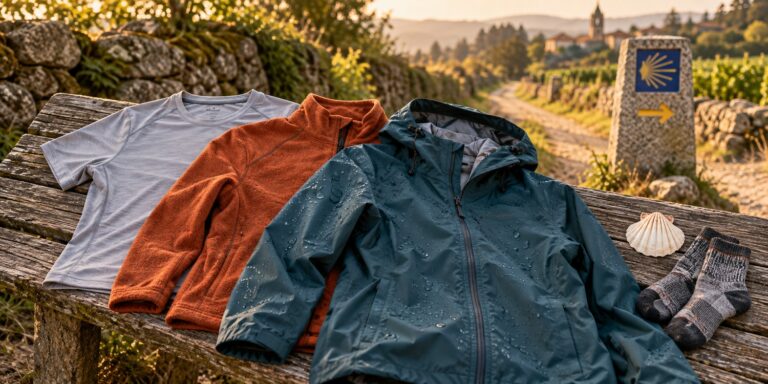
Before you set out, check our packing list for the Camino de Santiago and prepare your gear for the expected conditions.
Conclusion: which Camino de Santiago should you choose?
For those looking for an accessible first experience, the Central Portuguese Way, starting in Tui, is an option worth considering. The route is relatively short and lets you spread out the stages flexibly.
Even so, your choice should take into account your fitness level, the time you have available, and the type of landscape you prefer. The easiest route is the one you can complete at your own pace, with proper preparation and without excessive effort.
Plan your stages in advance, get your gear ready, and leave time to rest. After all, walking the Camino de Santiago isn’t a race to the finish line, but an experience to be enjoyed at your own pace.