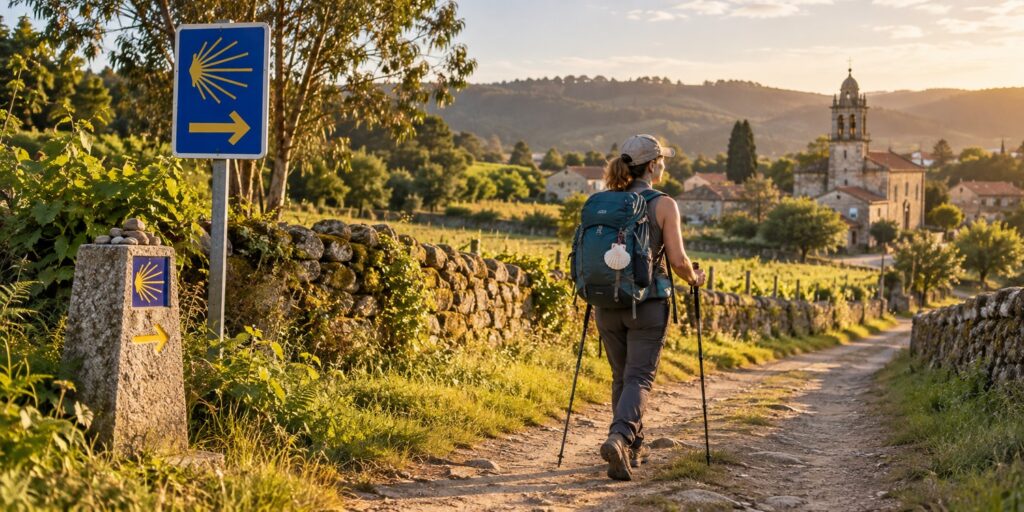

Nuno divides his days between the classroom and managing the IT departments of various projects, two worlds where everything depends on being connected. Perhaps that’s why he returns, year after year, to the Camino de Santiago, where the most important network is that of the yellow arrows. He has already completed several routes and doesn’t intend to stop. In this interview, we talk about technology, disconnection, education, and what makes someone always return to the same destination by different paths.
Table of Contents
How did your story with the Camino begin?
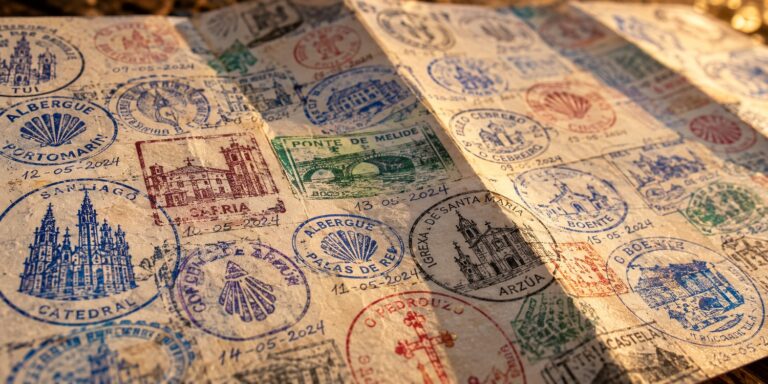
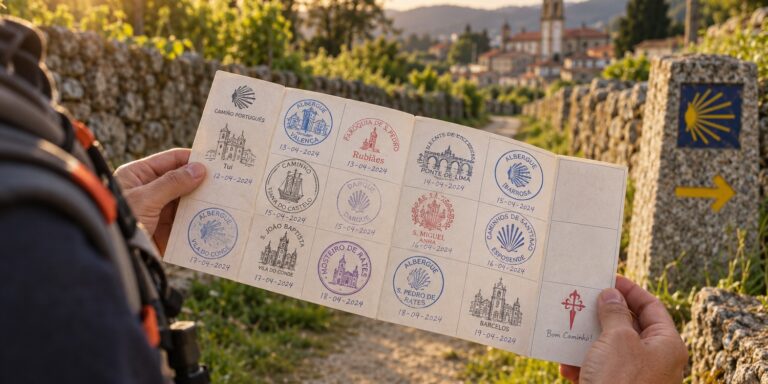
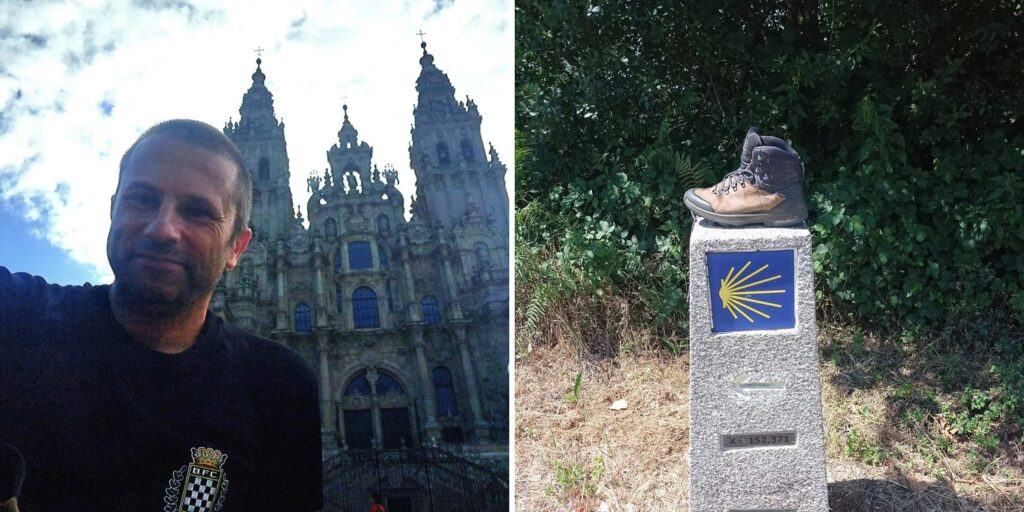
My first Camino was in 2016, when I walked the Central Portuguese Way, from Porto Cathedral to Santiago de Compostela. I decided to do it out of faith, curiosity, and also because of my lifelong love for long walks.
He continues to explore new routes. What makes him come back?
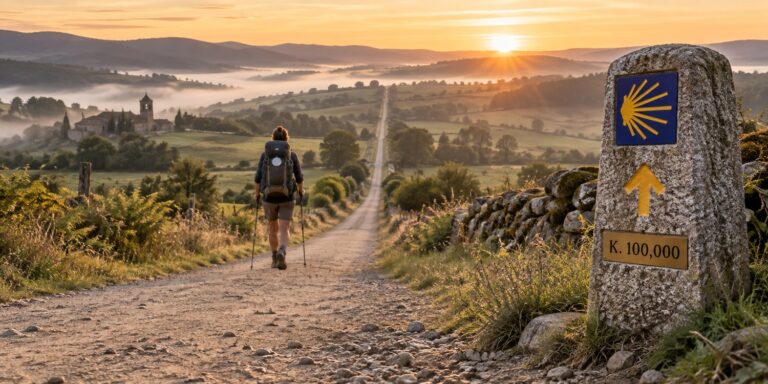
Since 2016, I’ve always set aside a few days each year to walk the Camino de Santiago, or at least part of it. What makes me want to return is a feeling that’s hard to explain, a constant desire to go back. I enjoy experiencing the Camino and using those days and kilometers to reflect on my life and strengthen my relationship with God.
He works in technology. Is he able to disconnect during his commute? How does he manage his mobile phone?
During the Camino, I only use technology for the essentials: booking accommodation, consulting maps, and taking photographs. Only at the end of each stage do I use my mobile phone for some leisure time and to talk to my family.
What apps or tools do you find truly useful on the Camino, and which ones do you dispense with?
The apps I find most useful are Booking, for booking accommodation, since I usually do it step by step, and route planning tools like Buen Camino, Maps, and Camino Ninja. I also highlight AlertCops , the Spanish police app, which allows you to request assistance in case of emergency.
Read also:Is it safe to do the Camino de Santiago?
Do you plan the journey like an IT project, or do you leave room for improvisation?
Before starting a Camino, I do in-depth research on its characteristics: accommodation, terrain type, supermarkets, transport, and other relevant aspects. As I like to walk between 30 and 40 kilometers a day, this preparation helps me define goals for each stage. However, I always leave room for adjustments, because unforeseen events can arise during the journey, such as lack of accommodation or simply the fact that my body doesn’t respond as expected.
What do the Path and the classroom have in common?
I believe that both require the ability to overcome adversity, resilience, and improvisation. Both on the Camino and in the classroom, unexpected challenges arise that force one to find solutions and keep moving forward.
Have you ever thought about doing the Camino with students? What do you think they would learn?
I never seriously considered that possibility, although it has been suggested to me before. Since I always do the Camino alone, because it’s a very personal moment of encounter with God, I never considered organizing a group of students. Even so, I believe they would learn to be more disconnected from the digital world, to listen to and feel nature, to develop the ability to wait, as well as to be more autonomous and resilient.
Of the routes you’ve taken, which would you recommend to someone who has never done any?
For beginners, I would recommend the Portuguese Coastal Way. Besides being a very beautiful route, it’s also relatively easy from a physical standpoint.
What’s next on the list?
At the moment, I am studying a new route: the Camino de León de Rosmithal.
What was the most useless (or most ridiculous) thing you ever carried in your backpack?
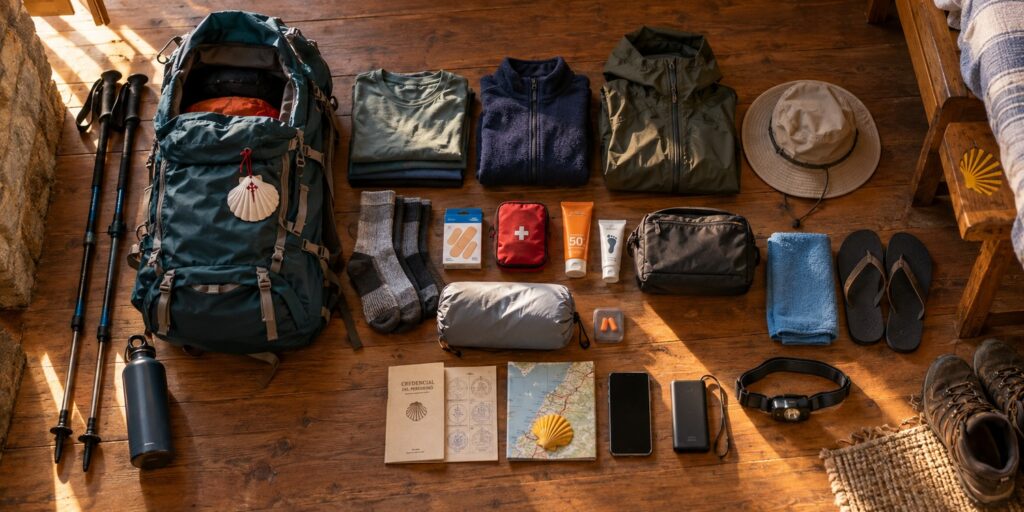
On my first Camino, I carried a backpack full of unnecessary things. In the following eight experiences, I learned to travel lighter each time. Perhaps the most useless item was a notebook I took with the intention of writing a diary of each stage. It ended up returning home exactly as it was: completely empty.
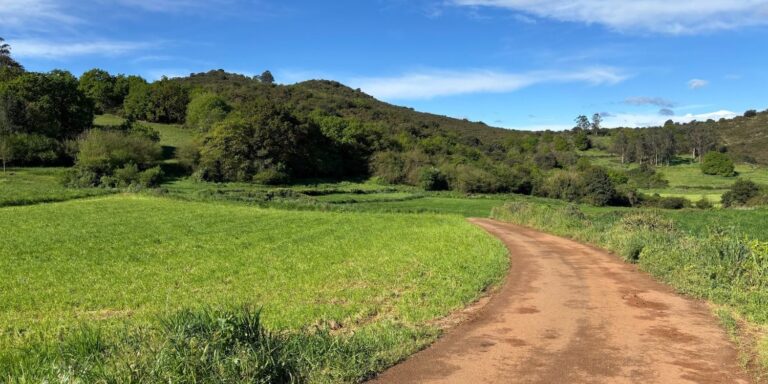
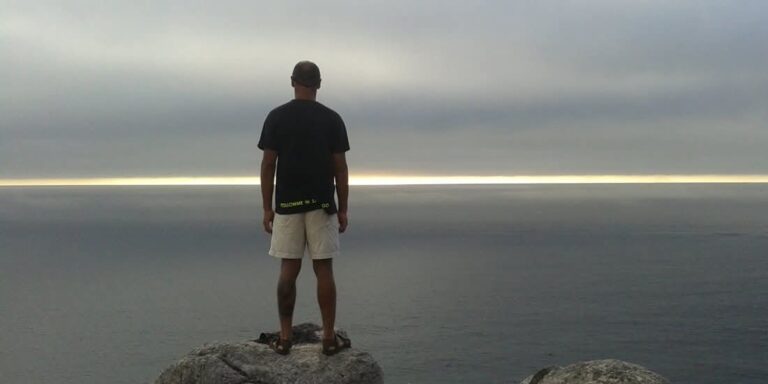
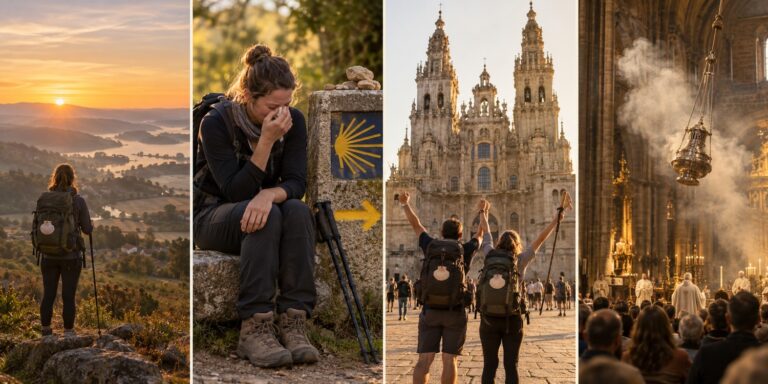
All photographs in this article are by Nuno.