
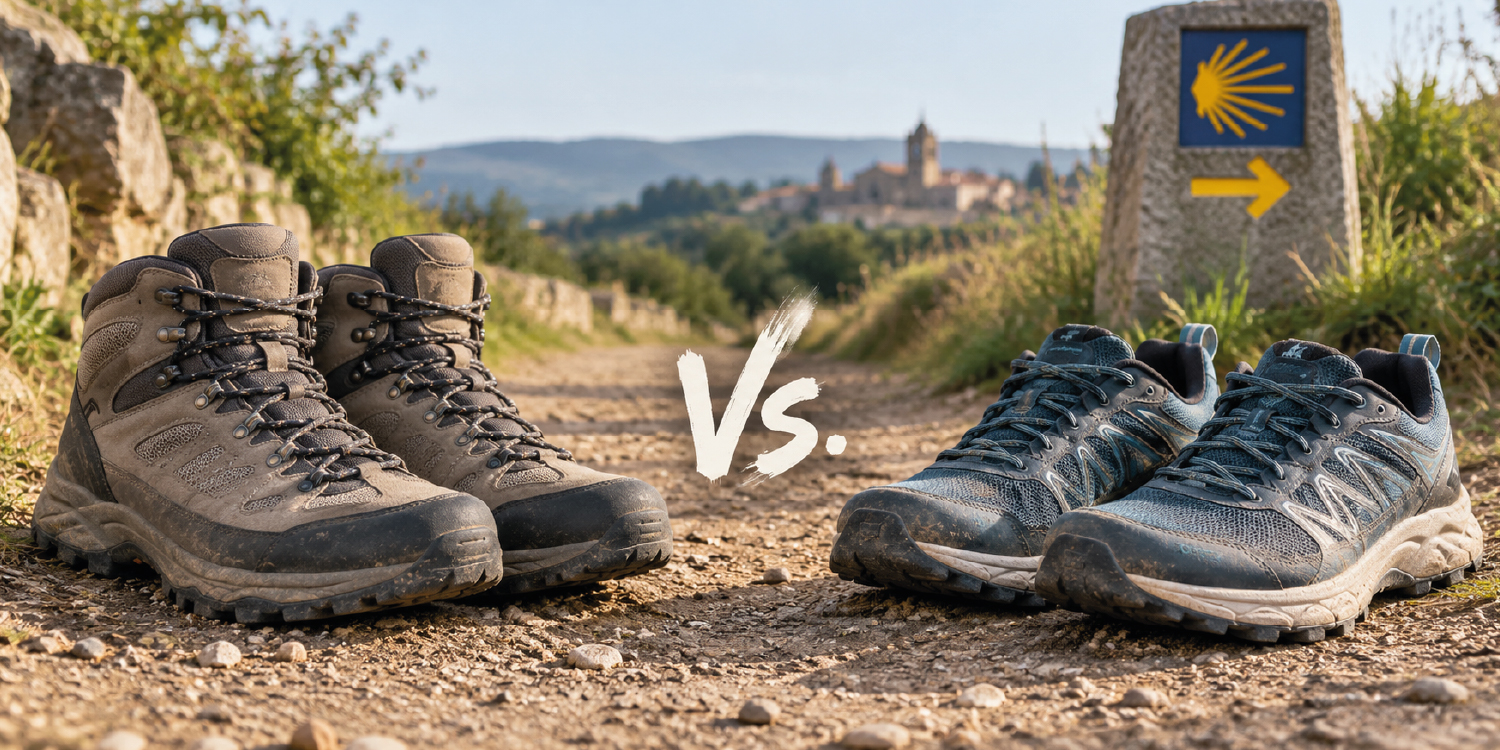

Few decisions weigh as heavily on your experience as your choice of footwear. And it’s natural to wonder: do I need hiking boots, or will a good pair of trail shoes do? It’s such a common question that almost every pilgrim asks it before setting off.
The truth is, there’s no single perfect shoe for everyone. The best shoes for the Camino de Santiago are the ones that suit your feet, the route you’ll be walking, and the time of year. What works for a friend may not work for you.
In this article, we’ll help you make the decision without rushing. You’ll learn when boots make sense, when trail shoes win out, what to choose on each route, and how to reduce the risk of blisters along the way.
Table of Contents
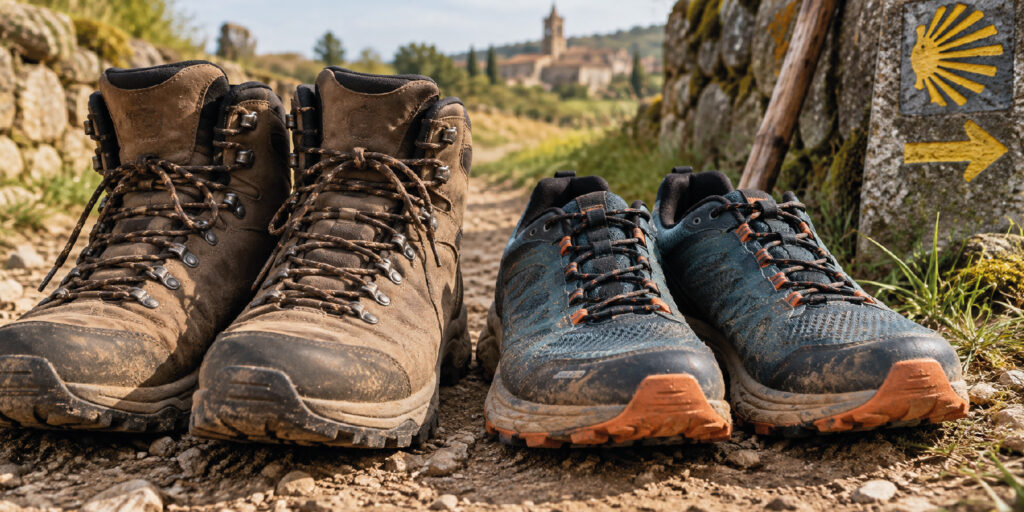
Boots or trail shoes: what do most pilgrims wear today?
A few years ago, walking the Camino in heavy hiking boots was almost a given. Today, things have changed: most pilgrims go for lightweight hiking shoes or trail running shoes. And then there are those who opt for sandals with socks.
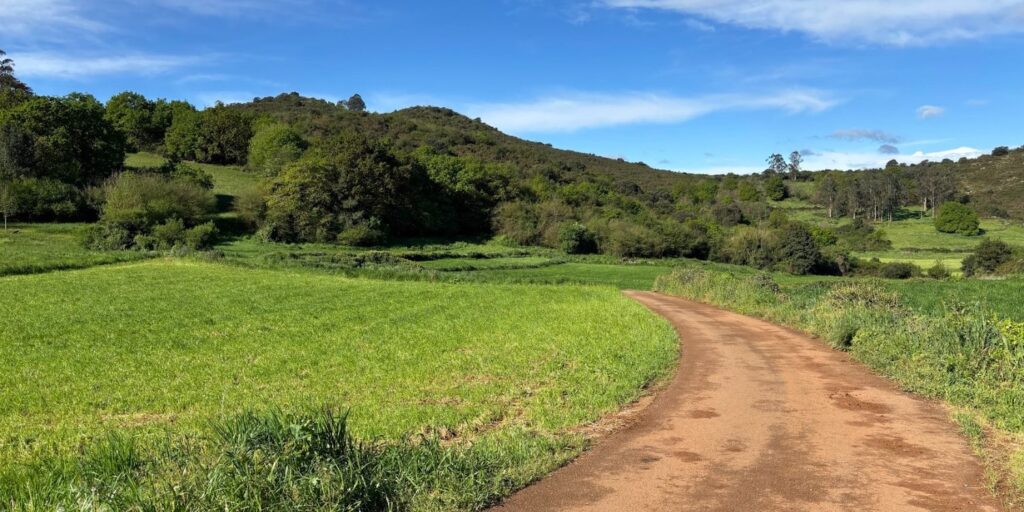
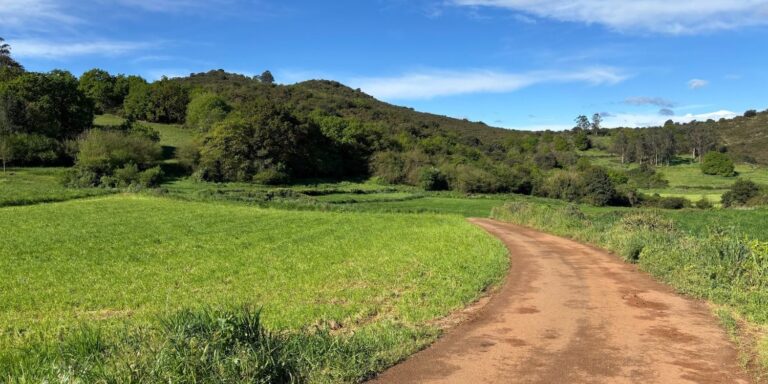
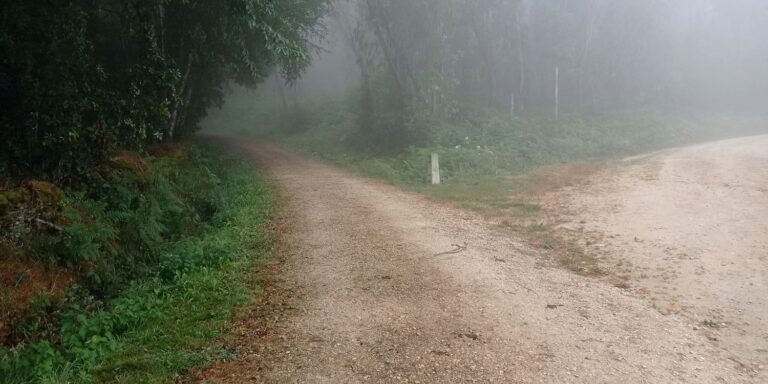
The reason is simple. Most stages follow dirt paths, wide unpaved tracks, villages, and stretches of asphalt. This isn’t high mountain terrain. On these surfaces, a stiff boot is usually overkill and, because it’s heavy, ends up tiring you out more than it protects you.
Still, “most” doesn’t mean “all.” There are situations where boots are still a pilgrim’s best friend (or a walker’s, if you prefer).
When to choose hiking boots
Boots make sense mainly when the terrain and the weather are more demanding. Consider them if:
- You’ll be walking in the fall or winter, with frequent rain and mud.
- You’ve chosen a mountain route, such as the Primitive Way or sections of the Northern Way.
- You have unstable ankles or a history of sprains and are looking for more support.
- You’ll be carrying a heavy backpack and want more stability.
The advantages are clear: more protection, better insulation, and firmer footing on uneven or wet ground. On the other hand, they’re heavier, get hotter in summer, and need a break-in period before your trip.
If you go with boots, choose lightweight or mid-cut trekking models rather than stiff high-mountain boots. On the Camino, almost nobody needs a sole so rigid that it doesn’t flex.
When to choose trail shoes
For many people, lightweight hiking shoes or trail running shoes are the most comfortable option from spring through fall. Every gram you save is multiplied by thousands of steps a day, and you feel it after several hours of walking.
They’re ideal when you’re looking for lightness, good ventilation, and good cushioning, especially on long stretches and hard surfaces. The trade-off is that they offer less protection and, without a waterproof membrane, get wet easily, although they also dry faster.
One detail that makes a difference: look for a model with a trail sole, with enough tread to grip damp ground. Road running shoes, with their smooth soles, slip easily on stretches of wet packed dirt.
Which shoes to choose for each route
Every Camino has its own character. Choosing with the terrain in mind makes a difference:
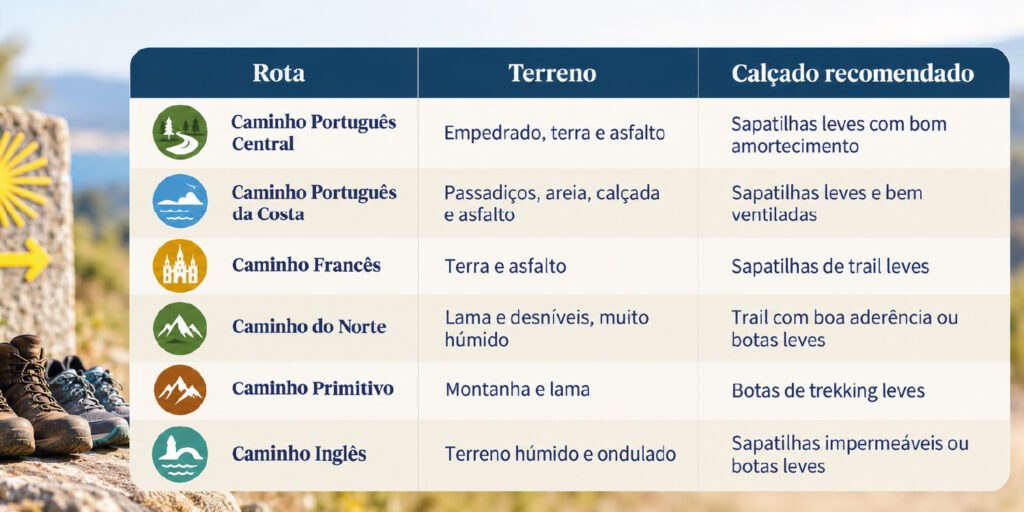
On the Portuguese Way, for example, the great silent enemy is the cobblestone paving in towns and on old stone roads, which punishes the soles of your feet stage after stage. Here, comfort and cushioning matter more than extreme protection.
The Coastal Way has a feature all its own: long wooden boardwalks and stretches right next to the beach. They’re pleasant to walk on, but sand easily gets into your shoes, which makes good socks all the more important, along with lightweight gaiters if you’re very sensitive to it.
Read also: Packing list for the Camino de Santiago
What about Gore-Tex? Is it worth it?
Gore-Tex, and equivalent membranes from other brands, make footwear waterproof. It’s worth it if you’re walking in the fall or winter, if you expect a lot of rain, or if you choose one of the wet routes in northern Spain.
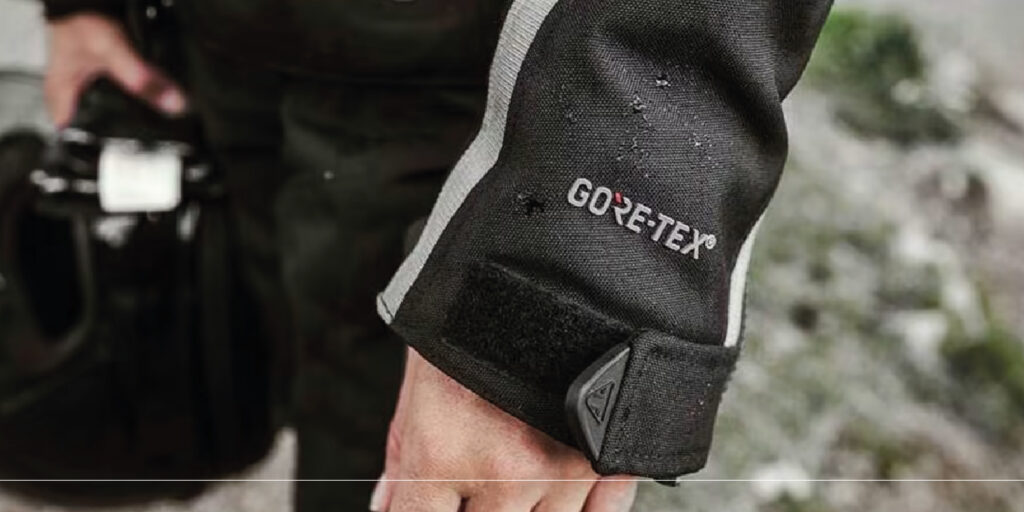
In the height of summer, it can be counterproductive. In hot weather, shoes that are too enclosed make your feet overheat, which increases sweat, friction, and, with them, the risk of blisters. Often, cool feet suffer less than feet soaked in sweat.
There’s one more point few people mention: when waterproof footwear gets wet inside, whether from rain getting in over the top or from a deeper puddle, it takes much longer to dry than breathable footwear. Consider the actual weather for the time of year you’re walking, not the worst-case scenario.
Socks: half the solution is right here
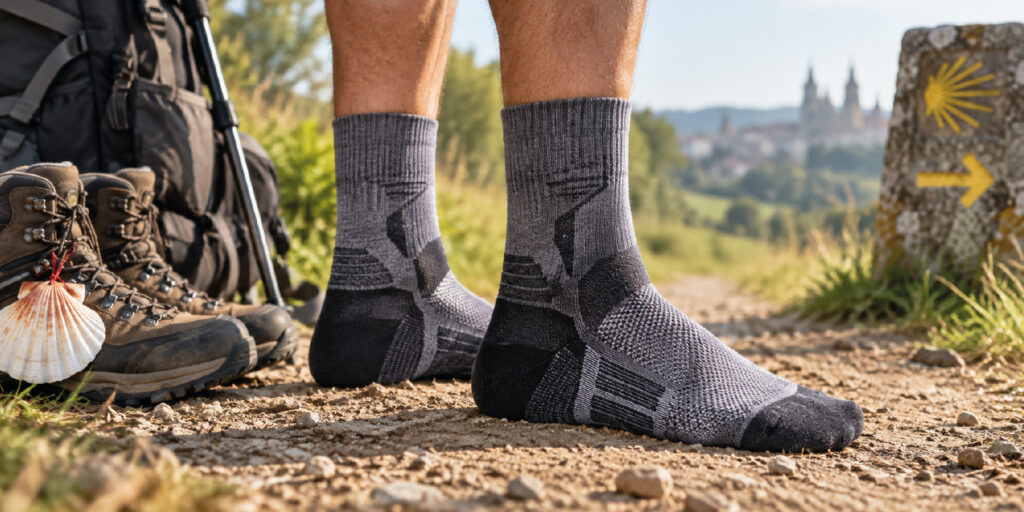
You can get your shoes exactly right and still have problems if you get your socks wrong. Socks are the most underrated piece of gear on the Camino.
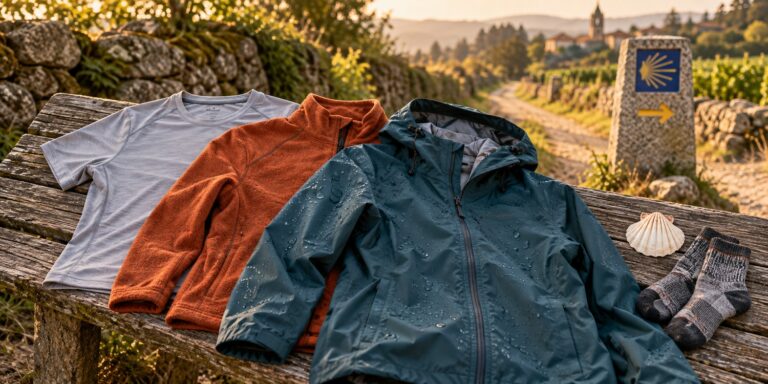
Go for quick-drying technical socks made of synthetic fiber or merino wool, with flat seams and some extra thickness in the friction areas (heel and toes). Cotton is the material to avoid: it holds moisture against your skin and multiplies friction.
Two or three pairs are enough. Wash one pair at the end of each stage and always keep a dry pair set aside for sleeping or for emergencies.
A handy tip is to wear your socks inside out so the seams don’t hurt your feet.
What size to choose
Your feet swell after hours of walking and in the heat. That’s why many pilgrims wear shoes half a size, and sometimes a full size, larger than usual.
To try them on properly:
- Try them on at the end of the day, when your feet are already more swollen.
- Wear the socks you’ll be taking on the Camino, not just any thin pair.
- Make sure there’s about a finger’s width of space at the front, especially with the descents in mind.
- Walk on a ramp or a flight of stairs in the store: if your toes hit the front on the way down, the size is too small.
The most common footwear mistakes
Some slip-ups happen year after year:
- Wearing brand-new shoes on day one. Walk at least 80 to 100 km in them before you set off.
- Choosing based on looks. A good-looking but uncomfortable model can ruin your trip.
- Ignoring size. Tight shoes are the most common cause of black toenails and blisters on the tips of your toes.
- Not testing them with your backpack on. Walking with weight changes your stride and the way your shoes feel.
- Bringing a heavy spare pair. Lightweight sandals or flip-flops take care of resting at the end of the day without weighing down your backpack.
How to reduce the risk of blisters
Blisters rarely come down to bad luck. They usually result from a combination of moisture, friction, heat, and poorly fitting shoes. To prevent them, rely on quick-drying technical socks, apply an anti-friction cream to sensitive areas, and stop as soon as you feel any discomfort instead of waiting until the end of the stage.
Other simple habits help a lot: take your shoes off during breaks to air out your feet, keep your toenails short, and lace your shoes up tightly before long descents so your foot doesn’t slide forward inside the shoe. To learn more, check out our guide on how to prevent blisters on the Camino de Santiago.
Conclusion: the best shoes are the ones you forget you have on
Choosing footwear isn’t about finding “the best boots on the market,” but the model that best fits your feet, your route, and the time of year you’ll be walking. In most cases, comfort and light weight count for more than excessive protection.
The next step is simple: choose early, wear your shoes on training walks, and adjust whatever you need to before you set off. When your first day on the Camino arrives, the goal is to almost forget you have them on. To complete your gear, also take a look at our packing list for the Camino de Santiago and our guide on what clothes to wear. If you’re still deciding on your route, it helps to know how long it takes to walk the Camino. Buen Camino.