
Packing your backpack is one of the most exciting parts of getting ready, but it’s also one of the steps that raises the most questions. Am I bringing too much? Too little? And what if I’m missing something along the way?
The golden rule is simple: on the Camino, every gram counts. And a gram today will feel like a kilogram after walking several kilometers, since an overly heavy backpack becomes a pilgrim’s worst enemy after a few days. The secret is to bring the essentials, in good quality, and to leave at home anything you’d pack “just in case.”
In this article, we share a packing list for the Camino de Santiago organized by category, so you can get everything ready without stress and without overloading your back.
Table of Contents
How much weight should you carry?
A widely used guideline is not to exceed 10% of your body weight, water included. If you weigh 70 kg, your backpack shouldn’t weigh more than 7 kg.
It isn’t a hard-and-fast rule, especially since different walkers have different levels of endurance and deal with different physical issues. Still, it helps you stay focused: if an item brings you closer to that limit without being truly necessary, it should probably stay at home.
A good exercise is to weigh your backpack on a bathroom scale before you leave. The number usually comes as a surprise, and almost always not a pleasant one.
Backpack and organization
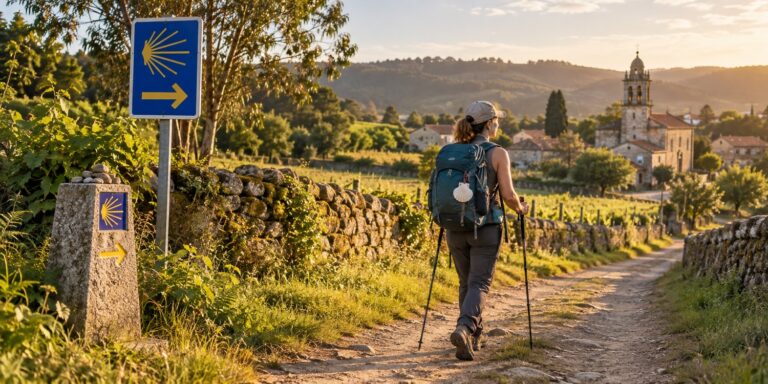
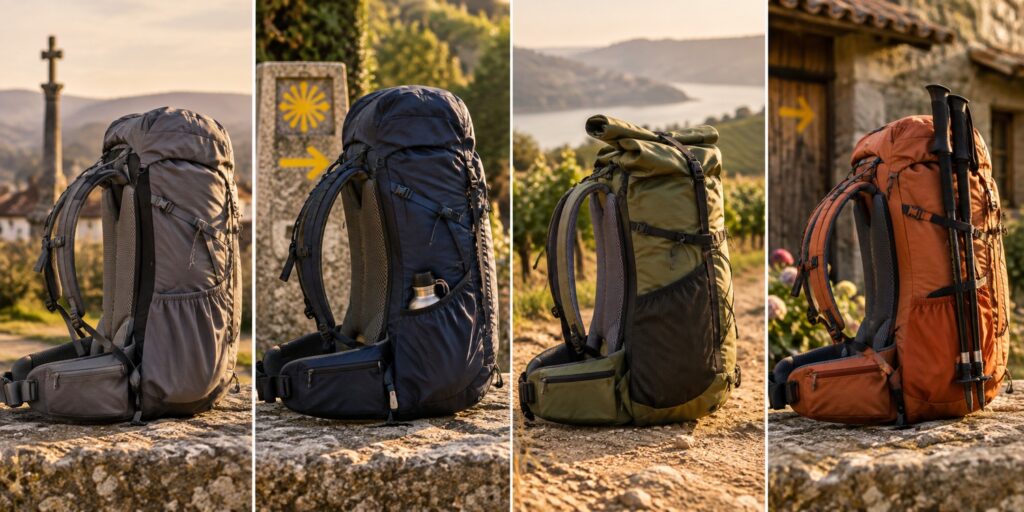
Your backpack is the centerpiece of all your gear. For day-long stages with a place to stay each night, a 30- to 40-liter backpack is usually enough. Look for a model with good shoulder straps and a hip belt, which shifts the weight onto your hips and takes the load off your shoulders.
Add to that:
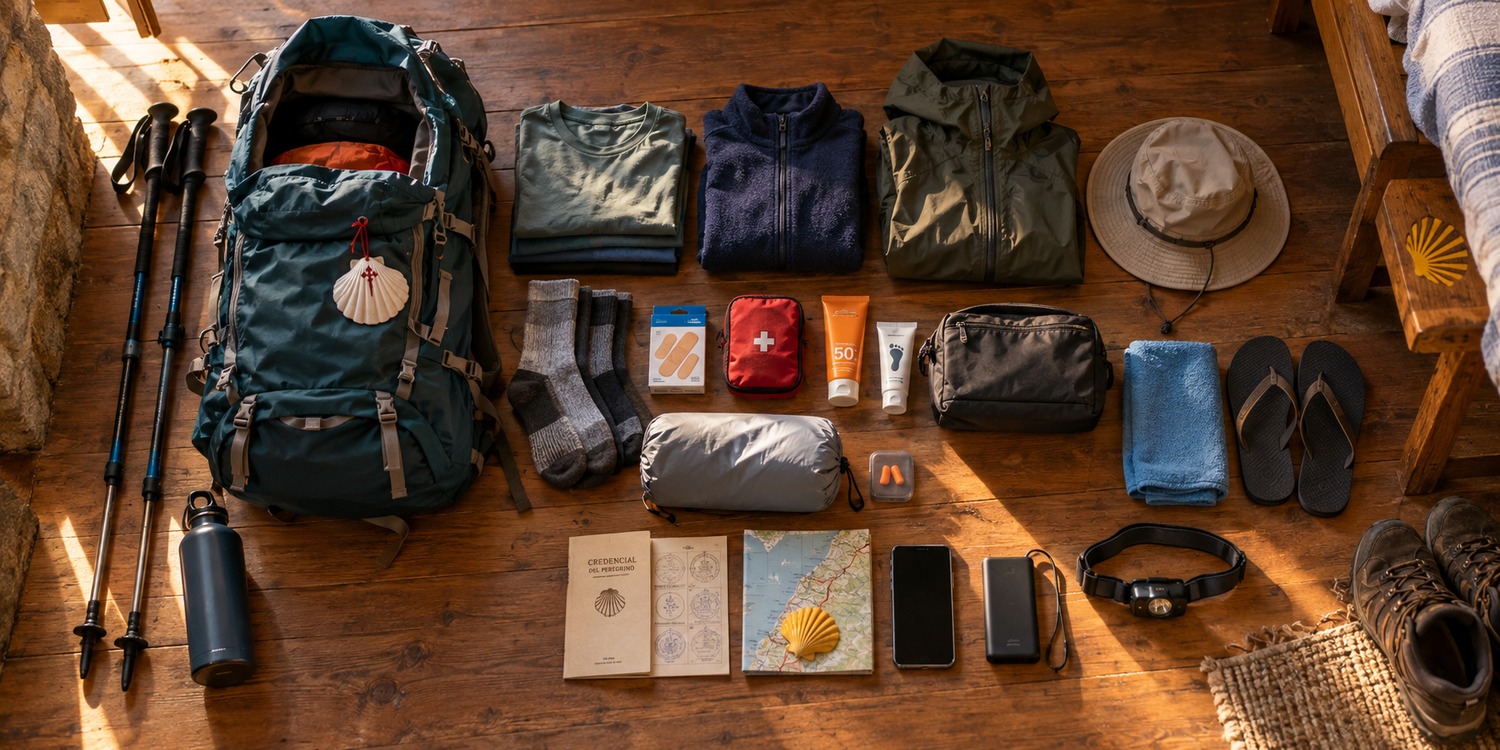
- a rain cover for your backpack.
- plastic bags or dry bags to separate and protect your clothes.
- a small pouch for documents and money that you keep on you at all times.
A note on fit: most of the weight should rest on your hips, not on your shoulders. If your shoulders are burning after an hour, the hip belt is probably too loose or the backpack isn’t adjusted to the right height.
Footwear and socks
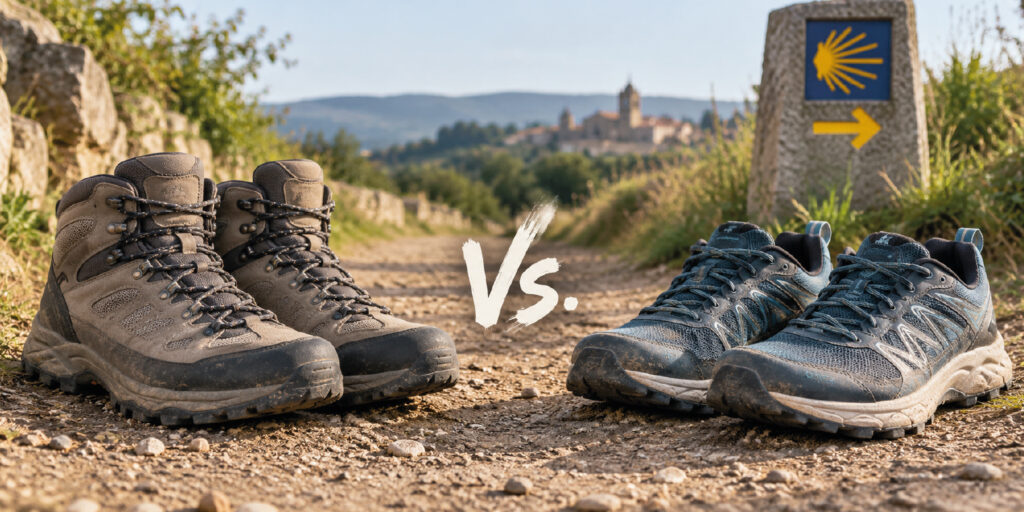
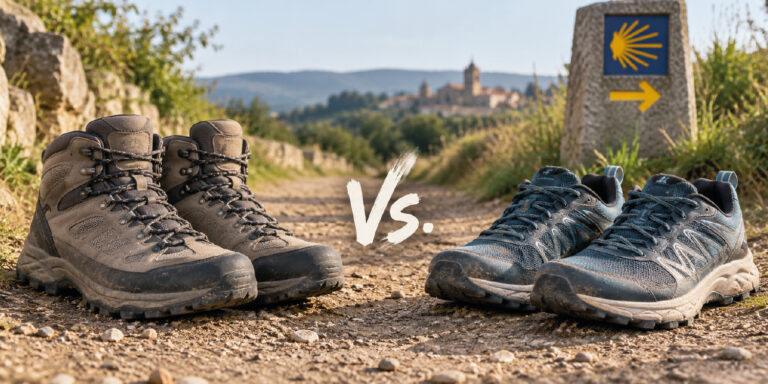
Footwear is probably the most important item. The choice between boots and trail shoes depends on the route and the season, a topic we cover in depth in our article on the best shoes for the Camino de Santiago.
Also bring:
- 2 to 3 pairs of quick-drying technical socks, steering clear of cotton.
- a pair of flip-flops or lightweight sandals, for the showers and for resting (and airing out) your feet.
Clothing
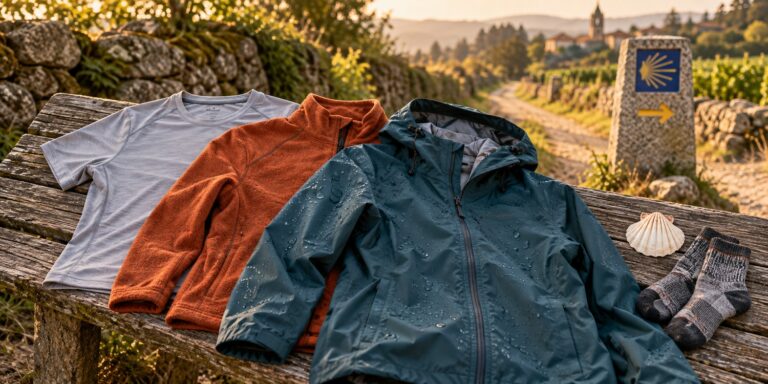
The key word here is “layers.” Instead of one thick garment, several thin ones that you combine depending on the weather. Lightweight technical clothing dries quickly and takes up little space. We’ve written a whole guide on this topic: what to wear on the Camino de Santiago.
In short, you should include technical T-shirts, a warm layer (a light fleece), a waterproof, breathable jacket, technical underwear, and headwear.
Rest and sleep
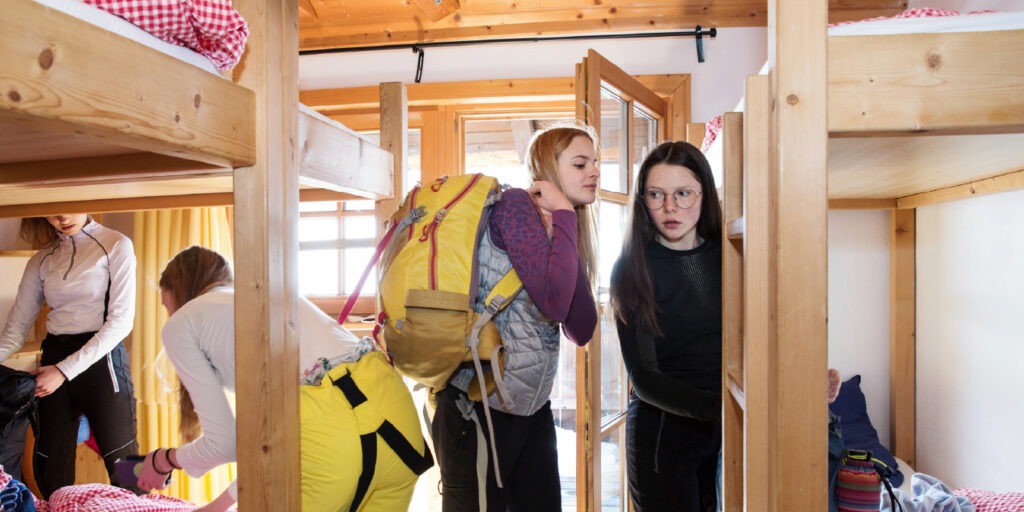
If you’ll be staying in pilgrim hostels, a lightweight sleeping bag or a sleeping bag liner is almost essential. Always check each hostel’s rules, because some provide disposable sheets and others don’t allow you to use your own sleeping bag.
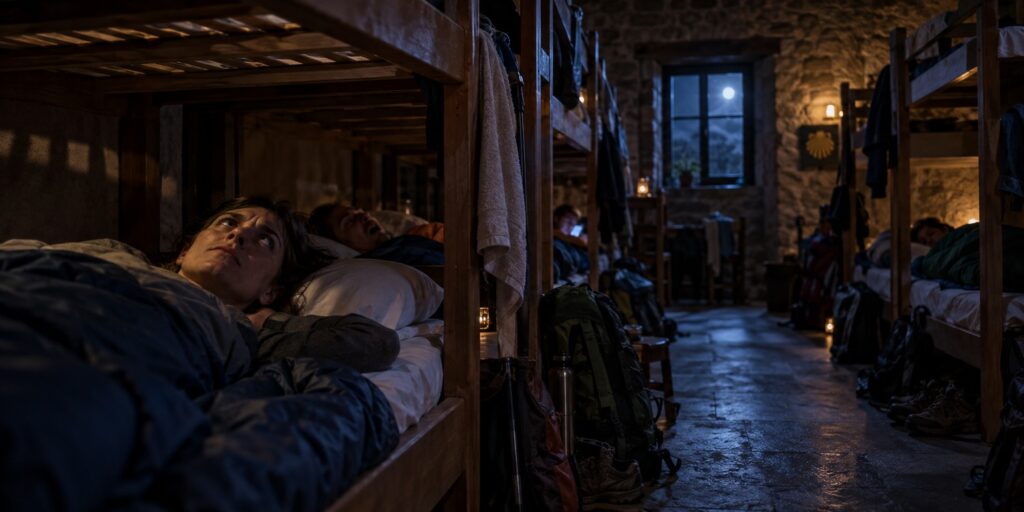
Even though the spirit of the Camino is one of sharing, community, and sacrifice, sleeping in hostels can be frustrating, especially after several days of walking: there’s noise, lights are left on, it isn’t your own comfy bed, and people arrive and leave at all hours.
Two small accessories that make a huge difference in shared dorms: earplugs and a sleep mask. They weigh next to nothing and can save you a night’s sleep.
Toiletries and first aid
Bring travel-size toiletries to save weight:
- soap or a neutral body wash, which works for both your body and your laundry;
- a small toothbrush and toothpaste;
- a quick-dry towel;
- sunscreen and lip balm with SPF.
In your first aid kit, include blister bandages, medical tape, an antiseptic, your usual medications, and an anti-friction cream. It’s no guarantee that nothing will go wrong, but it helps you deal with the small day-to-day discomforts. For any more serious health problem, always seek medical care.
Read also: What to wear on the Camino de Santiago? The complete list
Documents and money
Don’t forget:
- your ID and your European Health Insurance Card, useful for medical care in Spain;
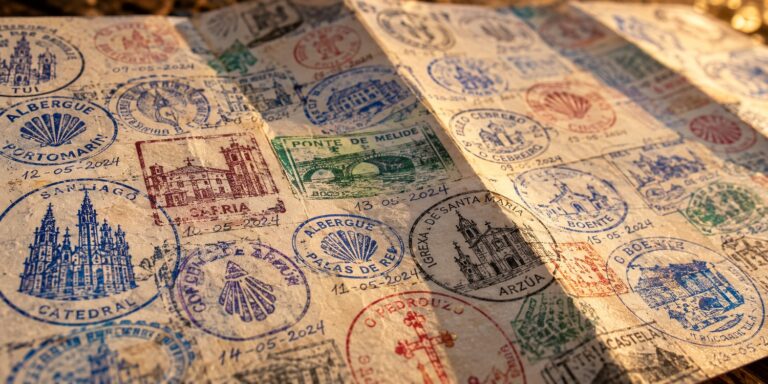
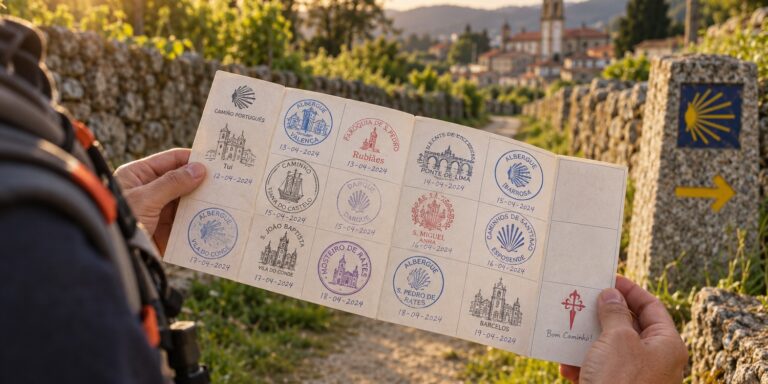
- your pilgrim’s credential, protected from the rain;
- proof of travel insurance, if you’ve taken out a policy;
- some cash, since not every place accepts cards.
If you haven’t sorted out your credential yet, check out our guide to the pilgrim’s credential and where to buy it.
Hydration and electronics
A reusable water bottle is essential. Add your phone, charger, a power bank and, if you like, a pair of earbuds. A small headlamp is very handy for heading out before daybreak and for finding your way around a dark dorm without waking anyone up.
You don’t need a plug adapter: Portugal and Spain use the same type of plug.
What to leave at home
This list is just as useful as the previous one. The most common things people overpack are:
- too many clothes, especially extra changes “just in case”;
- a hair dryer, a regular bath towel, and full-size toiletries;
- print books and heavy electronics;
- food for several days, when there are cafés and grocery stores on almost every stage;
- a second pair of walking shoes.
One question settles almost everything: “If I end up needing it, can I buy it along the way?” In the vast majority of cases, the answer is yes.
What if your backpack is still too heavy?
There’s a legitimate and widely used solution: backpack transfer between accommodations. The Spanish postal service provides this service on the main routes and, since 2026, also on the Portuguese Way from Porto, on both the Central Portuguese Way and the Coastal Way.
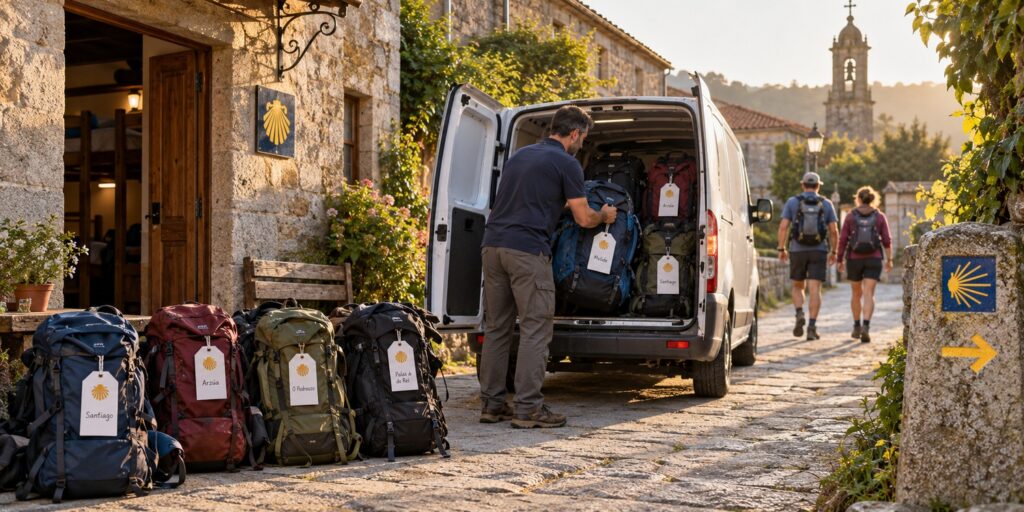
It works simply: you leave your backpack at your accommodation in the morning and find it waiting at the next one in the afternoon. There are also private companies that do the same.
Read this carefully: using this service doesn’t make you any less of a walker. It isn’t cheating at all; it’s a way of adapting the Camino to your physical condition, and it allows many people to complete a route they otherwise wouldn’t.
If you use this service, always carry a small daypack with water, documents, your credential, money, and a waterproof jacket.
Quick checklist before you go
Before zipping up your backpack, check:
- backpack with a rain cover, weighing less than 10% of your body weight;
- shoes you’ve already tested and technical socks;
- layered clothing and a waterproof jacket;
- sleeping bag or sleeping bag liner;
- toiletry kit and first aid kit;
- documents, credential, and money;
- water bottle and electronics;
- earplugs and a headlamp.
Conclusion: pack light, but pack right
The best packing list for the Camino de Santiago isn’t the longest or the most expensive; it’s the most balanced. Bringing the essentials, in good quality, is what makes for more comfortable stages and a more rested back.
The next step is to pack your backpack a few days in advance and try it out on a test walk. That way, you can fine-tune the weight and how everything is packed before the big day. And if you still have doubts about how safe the trip is, find out whether it’s safe to walk the Camino de Santiago. To work out how much time you’ll need, see how long it takes to walk the Camino. Buen Camino!