
It’s one of the first questions anyone who dreams of the Camino asks, especially if you’re planning to set off alone, if you’re a woman, or if it’s your first time. And it’s a fair question: after all, we’ll be spending several days walking through unfamiliar places.
The short answer is reassuring: the Camino de Santiago is considered one of the safest long-distance routes in Europe. In 2025, more than 530,000 pilgrims of all ages and nationalities arrived in Santiago, many of them walking alone.
That doesn’t mean there are no precautions to take. In this article, we talk honestly about the real risks, about safety when you walk alone, and about what you can do to enjoy the experience with peace of mind.
Table of Contents
So, is it really safe?
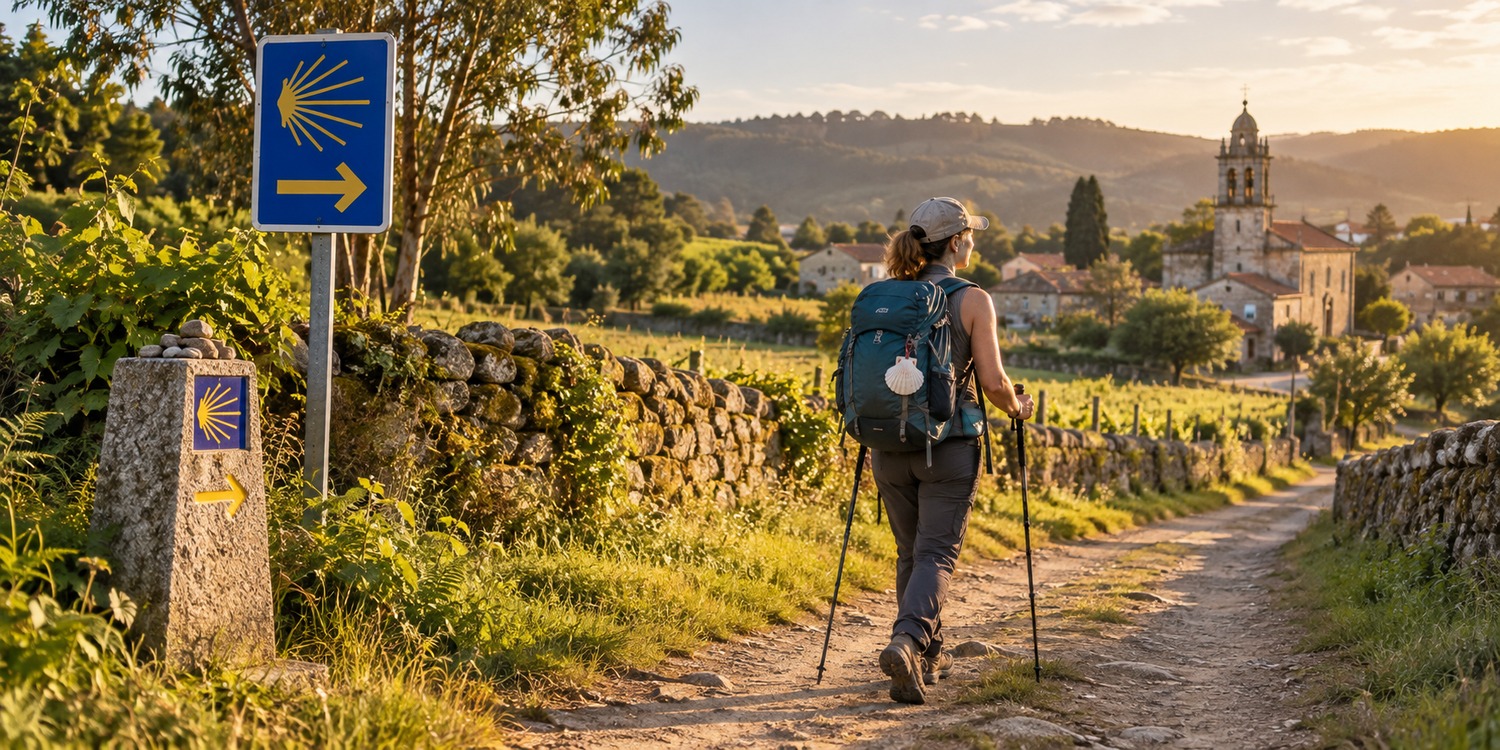
Yes, it’s safe to walk any of the official routes of the Camino de Santiago. The Camino is well waymarked, very busy, and has a network of pilgrim hostels, villages, and support services along the way. You’ll rarely be truly isolated for long, especially on the most popular routes, such as the Portuguese Way or the French Way.
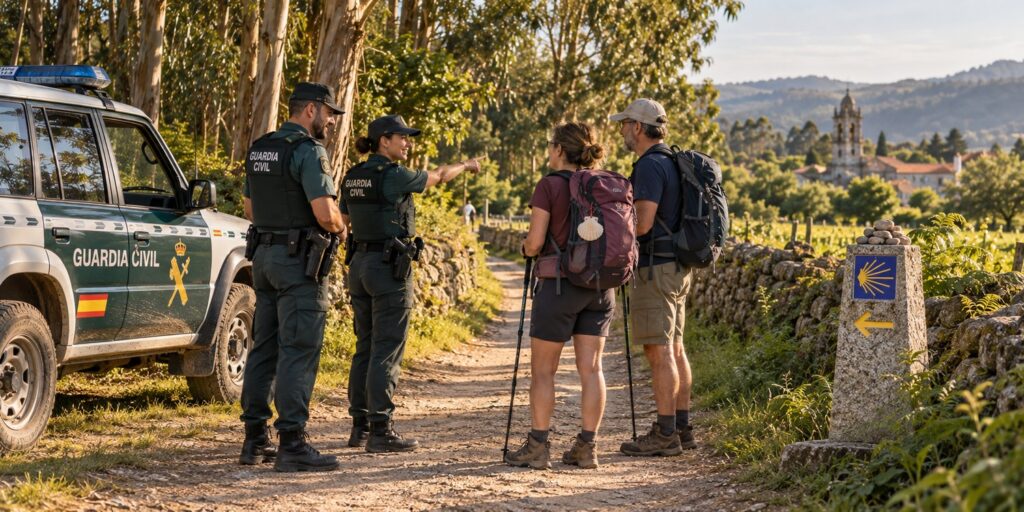
There’s also a dedicated security operation. Spanish law enforcement patrols the Camino routes during the high season, sometimes alongside police officers from other European countries, including Portugal, to assist foreign pilgrims.
The pilgrim community is also very supportive. It’s common for people to stop and help anyone in need. This mutual support is one of the hallmarks of the Camino and an extra layer of safety.
The real risks (and how to reduce them)
Contrary to what you might think, the biggest risks don’t come from crime but from injuries and carelessness. The most common ones are:
- blisters and foot injuries. Tried-and-tested shoes and technical socks go a long way toward preventing them.
- tendinitis and sore muscles. They come from stages that are too long or from carrying too much weight in your backpack. Take it easy for the first few days.
- heatstroke and dehydration. In summer, start walking early, wear a hat, and drink water often.
- traffic on some stretches. Some sections run alongside the road. Wear visible clothing and walk on the left, facing oncoming cars, when there’s no sidewalk.
- getting lost at a turnoff. It happens mostly on poorly waymarked variants or when you’re walking distracted. Bring a map app with the route downloaded so you can use it offline.
These precautions don’t eliminate the risk completely, but they reduce it significantly. If you have an injury or a symptom that worries you, stop and seek medical help. Don’t push it.
Is it safe to walk the Camino alone?
Yes, and it’s a very common choice. One fact is worth mentioning, as it tends to reassure anyone who’s hesitating: in recent years, women have made up the majority of pilgrims arriving in Santiago, and a significant share of them walk without company.
The feeling of loneliness doesn’t last long. At pilgrim hostels and during breaks, it’s almost impossible not to meet other pilgrims and form small, informal groups that break up and come back together as the days go by.
Still, a few precautions make sense if you’re going alone:
- let someone you trust know your stage plan;
- share your real-time location from your phone;
- avoid walking alone at night or taking unmarked shortcuts;
- don’t post publicly on social media where you’ll be sleeping or details of your route;
- trust your instincts: if a place or situation makes you uncomfortable, walk away.
The AlertCops app
This tool is worth getting to know before you set off. AlertCops is a free app from the Spanish Ministry of the Interior that lets you contact the National Police and the Guardia Civil directly, send your real-time location, and report incidents, with automatic translation into several dozen languages.
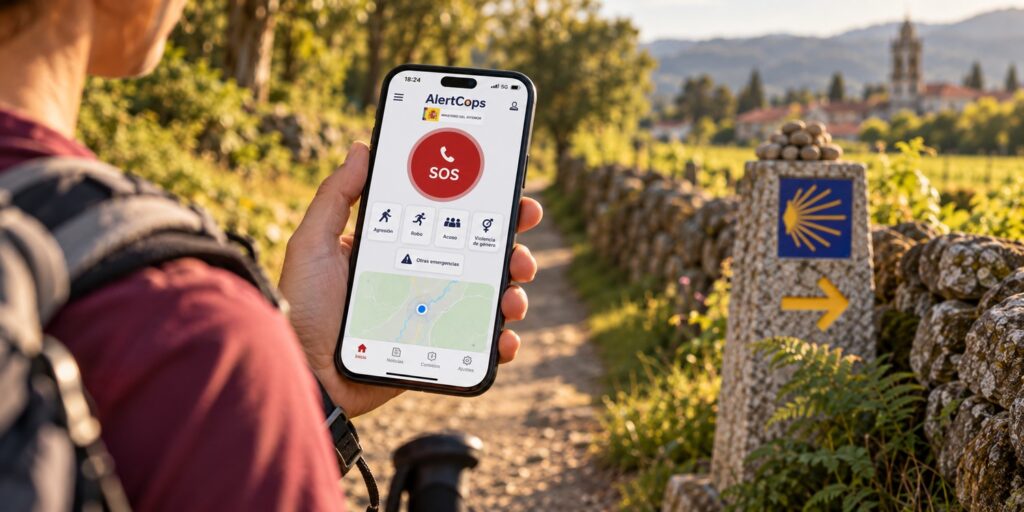
It has a feature designed specifically for the Camino, the “Guardián del Camino de Santiago,” which periodically shares your location with law enforcement operations centers to speed up the response in an emergency.
Since 2026, the official pilgrim’s credential itself includes a QR code to download the app. If you’re walking alone, it’s one of the most useful things you can install before you set off.
Read also: 15 reasons to walk the Camino de Santiago
What about theft?
Theft is rare but, as on any trip, not impossible. Common sense takes care of most situations. Don’t leave valuables in plain sight at pilgrim hostels, use a small pouch worn close to your body for documents and money, and keep your phone and wallet with you at all times, even in the showers.
Be extra alert when you arrive in Santiago and in other larger cities, where there are bigger crowds and, with them, more opportunities for petty theft.
Health: get your body ready before you go
The Camino is demanding on the body, especially if you’re not used to walking for many hours at a stretch. Good physical preparation, with training walks in the weeks beforehand, makes all the difference.
Start with short routes and gradually increase the distance, always wearing the shoes and backpack you’ll be using. The goal isn’t to arrive in peak athletic shape; it’s to get your feet, knees, and back used to the repetitive motion.
If you have a health condition, take regular medication, or aren’t sure whether you’re fit for the effort, the most responsible step is to talk to your doctor before you go. This article is for information only and doesn’t replace a professional assessment.
Travel insurance and useful contacts
Travel insurance with medical and assistance coverage is highly recommended, especially on stretches outside Portugal. Check whether it covers repatriation and multi-day hiking activities.
Also bring your European Health Insurance Card, which gives you access to public healthcare in Spain on the same terms as residents. It’s free and can be requested through Social Security, but it takes a few days to arrive, so apply for it well in advance.
Save the European emergency number, 112, on your phone. It works in both Portugal and Spain. In the event of an accident or a serious situation, it’s the first number to call.
Before you head out: check the weather
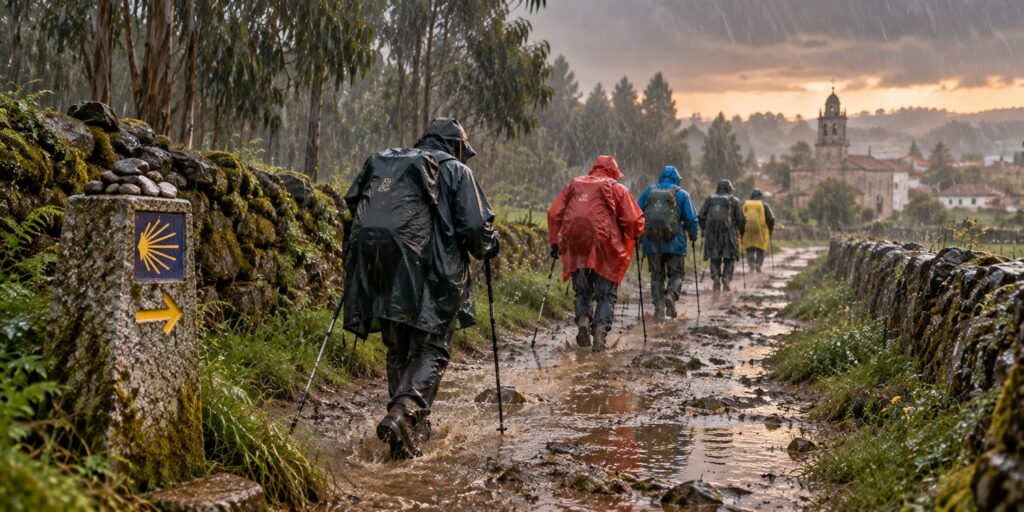
A significant share of incidents are weather-related, from extreme heat in summer to late-afternoon thunderstorms and wind warnings in the fall. Check the forecast the day before each stage and, above all, pay attention to weather warnings.
If there’s an orange or red warning, postpone the stage or shorten it. No stamp is worth the risk.
Conclusion: walk informed and at ease
The Camino de Santiago is safe for the vast majority of people who walk it, whether alone or with company. The essential precautions have more to do with your body and common sense than with fear.
The next step is to prepare without rushing: train, pack a light backpack, get insurance, and let someone know your plan. With these basics in place, all that’s left is to enjoy every stage. To round out your preparation, check out the packing list for the Camino de Santiago, choose the right shoes for your route, and find out how long it takes to walk the Camino. Buen Camino.