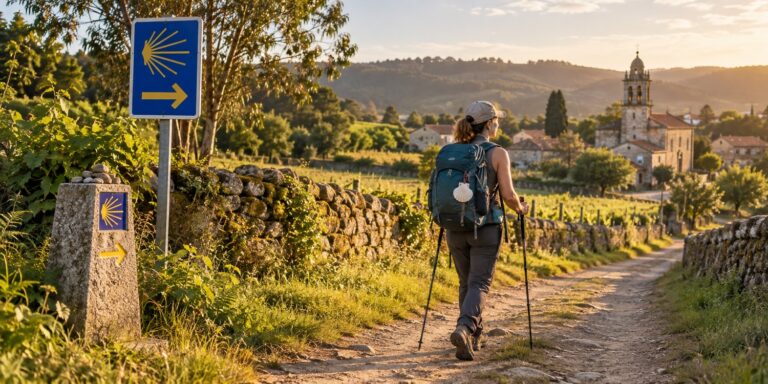


Once you’ve chosen your route and your shoes, it’s time to think about clothing. And this is where many pilgrims hesitate: Will I be cold? What if it rains? How many changes of clothes should I bring?
The right answer isn’t to bring a lot of clothes, but to bring the right clothes. On the Camino, a few well-chosen pieces are worth more than a full suitcase. Lightweight, technical, versatile clothing is what makes the difference.
In this article, we’ll show you what to wear on the Camino de Santiago, with a complete list and the adjustments you’ll need for each season.
Table of Contents
The principle that changes everything: the layering system
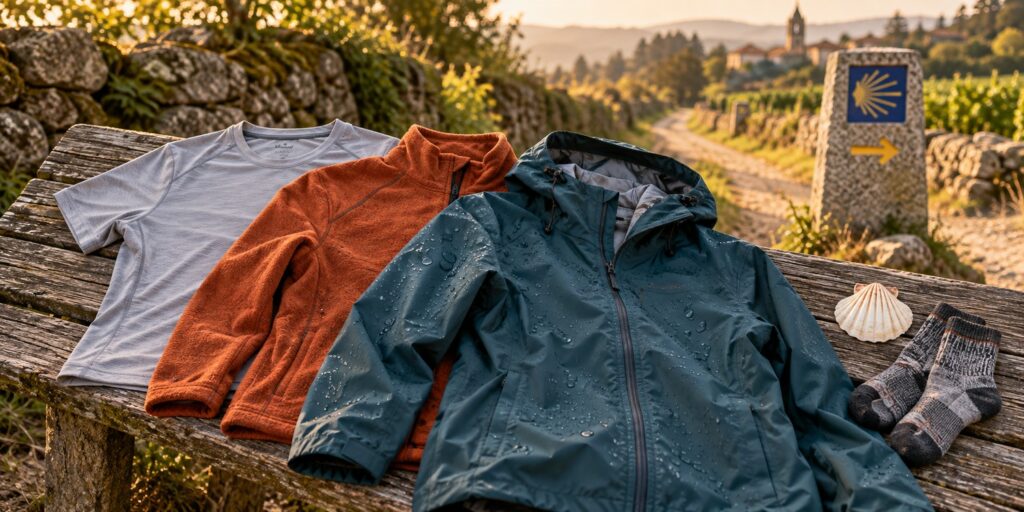
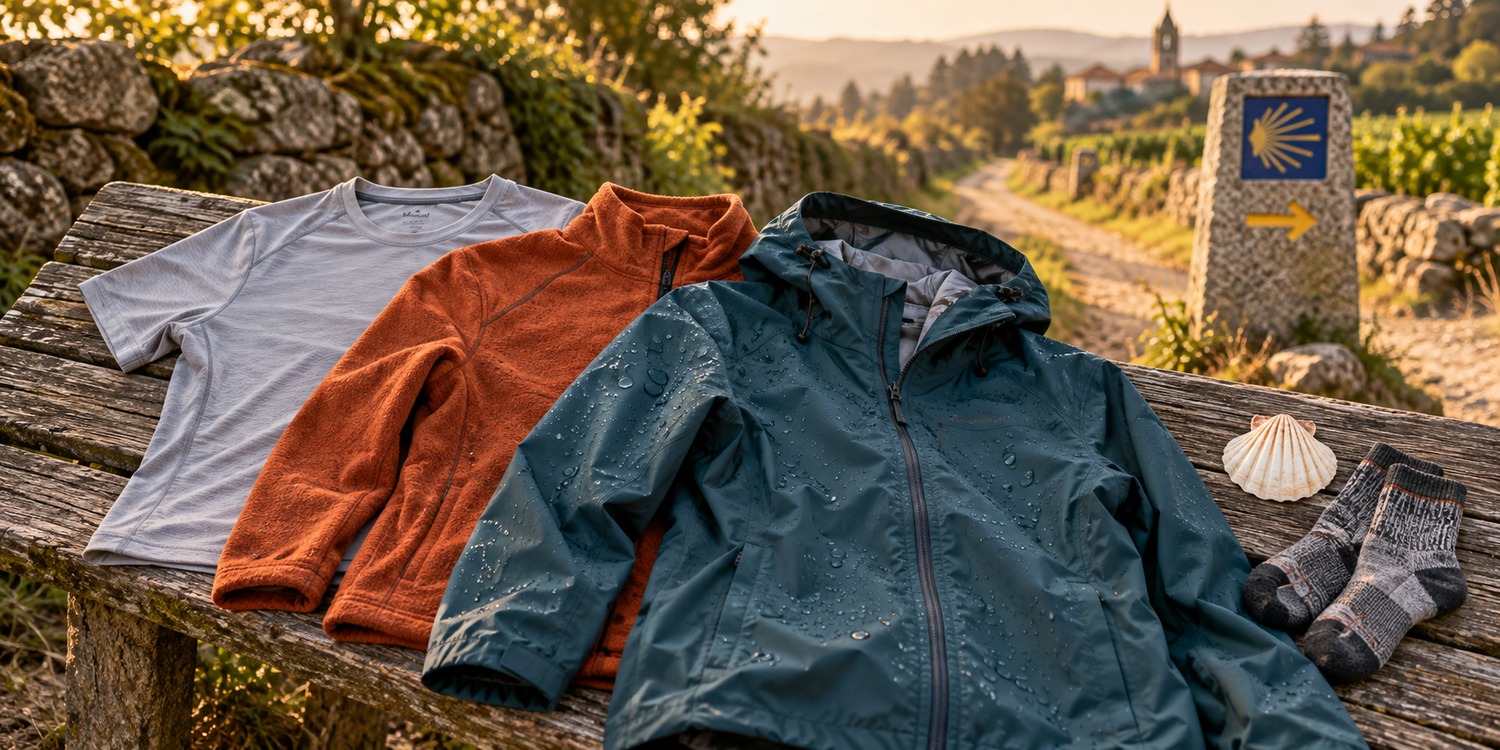
Instead of one very thick garment, the secret is to wear several thin layers that you can add or remove depending on the weather and how hard you’re working. This system is usually divided into three:
- Base layer (next to the skin): technical clothing that wicks sweat away. Never cotton, which gets soaked and takes a long time to dry.
- Mid layer (insulation): a warm, lightweight piece, such as a thin fleece, to hold in heat.
- Outer layer (protection): a waterproof, breathable jacket against rain and wind.
That way, you can adapt to a cool morning, a hot midday, and a sudden downpour without having to change everything.
A practical tip: start each stage feeling slightly cool. After ten minutes of walking, your body warms up, and anyone who sets off too bundled up ends up stopping soon after to take off layers.
Fabrics: what to choose and what to avoid
Go for synthetic technical fabrics or merino wool, which dry quickly, weigh little, and control odors better. Cotton, however comfortable it may seem, is the big one to avoid in hiking clothes: it absorbs sweat, chills your body, and encourages blisters when it’s in contact with your feet.
There’s a difference between the two that’s worth knowing. Synthetic fibers dry faster and are cheaper. Merino wool dries a little more slowly, but it keeps you warm even when damp and resists odors much better, which means you can wear the same piece several days in a row.
The three-set rule
A simple way to organize your clothes: one you’re wearing, one washed and drying, and one spare. With this system, three T-shirts, three pairs of socks, and three sets of underwear are enough for a Camino of any length.
What lets you pack so little is the routine of washing at night. Technical clothing hand-washed at the end of the stage is dry by the next morning, especially in summer.
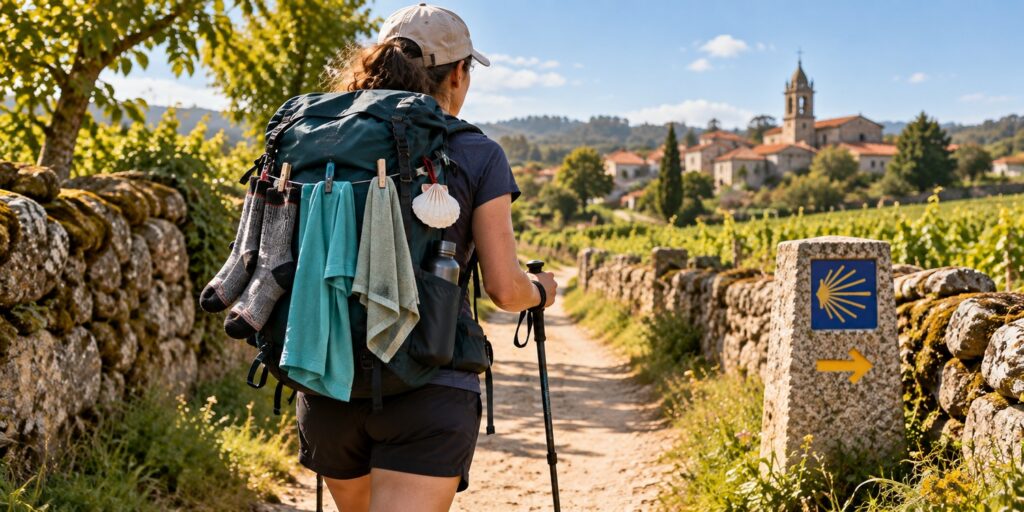
And yes, rest assured: all pilgrims and walkers wash their clothes at night and leave them to dry hanging from their backpacks, as we explain below.
Basic clothing list
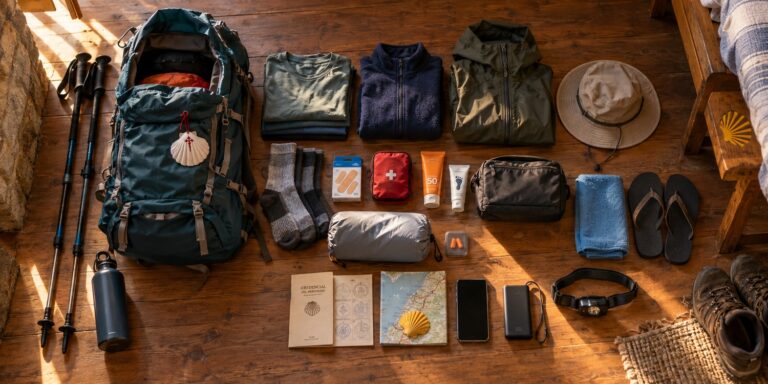
Whatever the season, this is the basic kit that usually works:
- 2 to 3 quick-dry technical T-shirts;
- 1 pair of hiking pants, ideally the zip-off kind that converts into shorts;
- 1 lightweight fleece or warm sweater;
- 1 waterproof, breathable jacket;
- Technical underwear;
- 2 to 3 pairs of technical socks;
- A hat or cap and a buff, versatile protection for your head and neck;
- 1 set of comfortable clothes for the end of the stage;
Notice that almost everything can be washed at night and will be dry by morning. That’s what lets you pack so little.
Read also: How long does it take to walk the Camino de Santiago?
Waterproof jacket or poncho?
Both options work, and each has its fans. A hooded waterproof jacket is more versatile, gives you more freedom of movement as you walk, and doubles as a windbreaker, but you’ll need a separate cover for your backpack.
A pilgrim poncho covers your body and your backpack in one go, is quick to put on, and ventilates better in warm rain, but it’s uncomfortable in strong wind and less practical in urban areas.
If you’re walking in northern Portugal or Galicia, you’re almost certain to get rained on, even in summer. Always bring one of the two; never leave both at home.
Adapting your clothing to the season
The weather in northern Spain and along the Portuguese Way changes quite a bit throughout the year. Adjust the basic list like this:
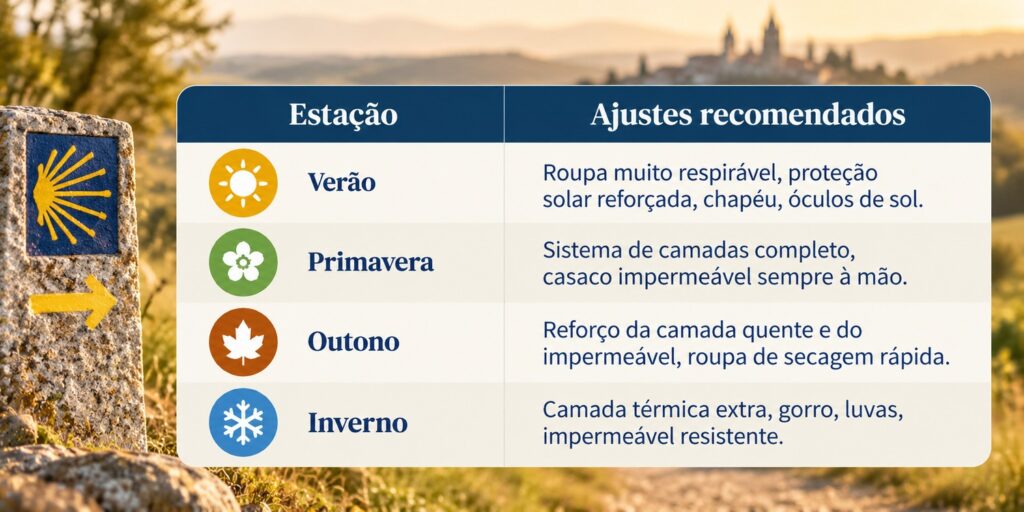
In summer, protecting yourself from the sun is just as important as the clothes themselves. In winter, on the other hand, staying dry and warm is the top priority.
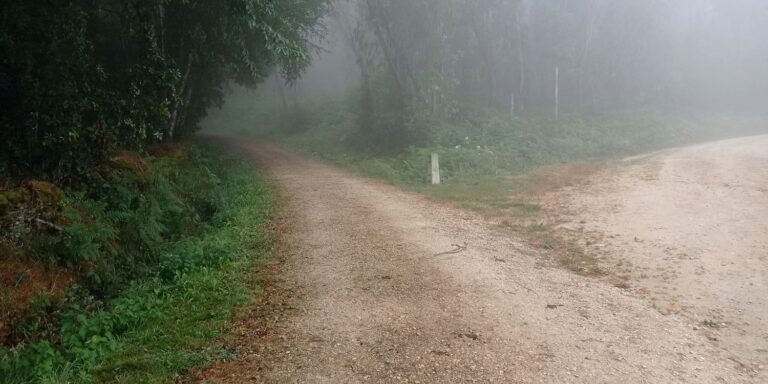
There’s also a detail specific to Galicia and the Minho region that catches many people off guard: even in August, mornings can be cool and damp, with thick fog. An extra light layer takes up little space and does the trick.
Clothes for resting and sleeping
After hours of walking, being able to put on something clean and comfortable is a small luxury. Bring a lightweight set just for the end of the day and for sleeping. It also helps your skin breathe and gives your body a rest.
In pilgrim hostels, a modest, comfortable outfit is better than very skimpy clothing: the dorms and common areas are shared spaces.
Doing laundry along the way
One of the advantages of bringing technical clothing is how easy it is to wash by hand. Many hostels have dedicated areas for this, and some have paid washing machines, which are worth sharing with other pilgrims.
With some mild soap and a makeshift clothesline, you can keep your clothes in rotation without needing extra changes. A few safety pins come in handy for attaching items to your backpack so they can dry while you walk.
A well-known trick for damp days: after wringing out an item, roll it up in a microfiber towel and press down hard. Much more water comes out, and the clothing dries a lot faster.
Conclusion: fewer pieces, better chosen
Knowing what to wear on the Camino de Santiago is, above all, about learning to rely on a few versatile pieces. The layering system and technical fabrics let you be ready for any weather without carrying unnecessary weight.
The next step is to put your outfit together ahead of time and test it on a hike, ideally in some rain or heat, to see how it holds up. Then add everything to your packing list for the Camino de Santiago and check out the best shoes for your route. If you’re walking in winter or during the rainy season, it’s also worth reviewing our tips on whether it’s safe to walk the Camino de Santiago. Buen Camino!