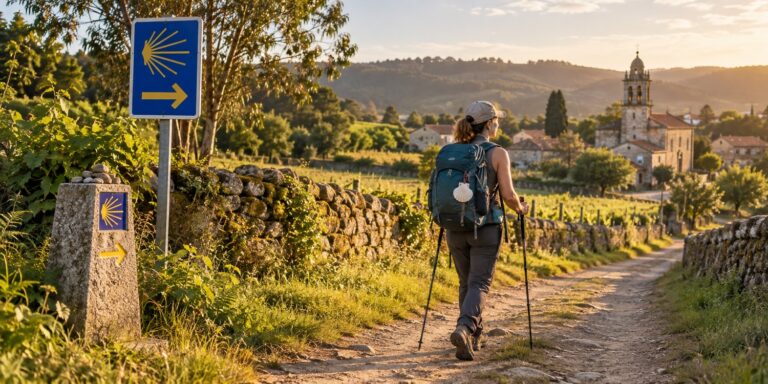

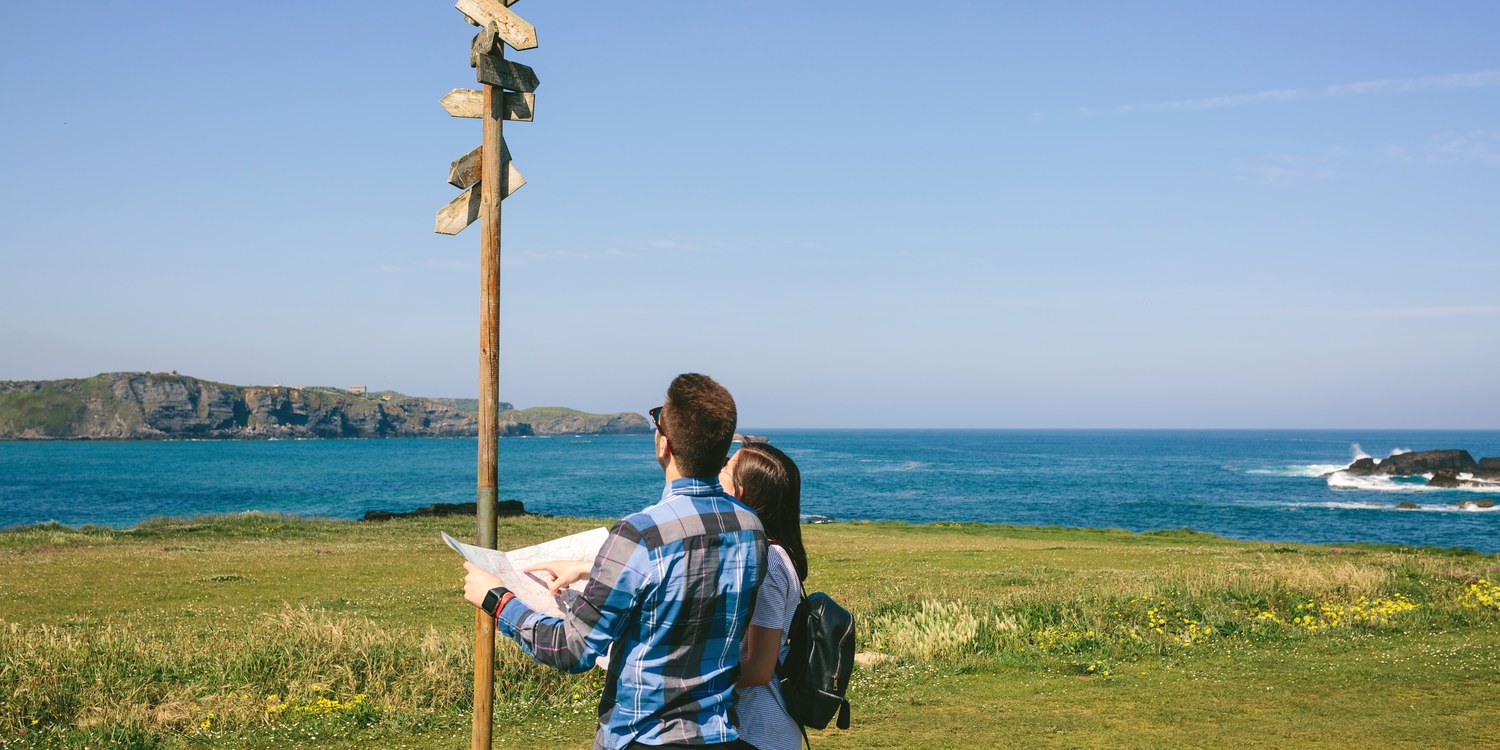
The Camino de Santiago has several routes, but few let you combine the pilgrimage experience with scenery so close to the sea. The Portuguese Coastal Way is an alternative to the traditional route, ideal if you want to walk along the Atlantic and discover coastal towns in Portugal and Galicia.
In this guide, we explain the main stages, the distance, the best time to set out, and what you should bring to enjoy the trip comfortably and safely.
Table of Contents
What is the Portuguese Coastal Way, and how many kilometers is it?
The Portuguese Coastal Way is a variant of the Portuguese Way of the Camino de Santiago that starts in Porto and follows the coastline to Santiago de Compostela. Along the route, it takes in beaches, boardwalks, fishing villages, and rural areas, offering an experience that differs from the traditional one.
The distance is around 270 to 300 kilometers, depending on the route you choose. To complete the pilgrimage, many walkers set aside 12 to 14 days, with daily stages of roughly 20 to 25 kilometers.
However, the time it takes depends on each person’s pace, so it’s best to adjust the distances to your fitness level.
What are the main stages of the Portuguese Coastal Way?
The route can be divided in different ways, but some towns stand out as important waypoints:
- Porto – Vila do Conde: a stage that combines urban areas, beaches, and boardwalks.
- Vila do Conde – Viana do Castelo: a stretch marked by coastal scenery and close contact with the Atlantic.
- Viana do Castelo – Caminha: a walk through coastal towns and along nature trails.
- Galicia – Santiago de Compostela: after crossing the Minho River, the route continues through Galician towns until it links up with the route that leads to Santiago.
Distances vary depending on the variant you follow and where you start and finish. That’s why it’s best to check the official Santiago Tourism website when planning your itinerary.
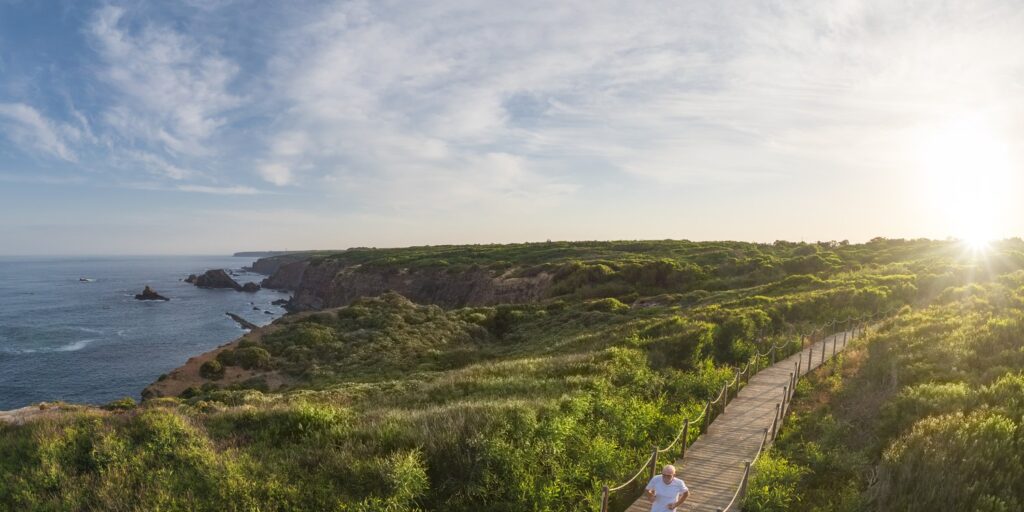
When is the best time to walk the Portuguese Coastal Way?
Spring and early fall are good options if you’re looking for milder temperatures and pleasant walking conditions.
In summer, the longer days make it easier to plan the stages, but the heat and sun exposure call for extra care. In winter, on the other hand, rain, wind, and damp can make some sections more difficult.
Whatever the season, check the weather forecast before you set out and pack clothing suited to the expected conditions.
Read also: When to go? The best time to walk the Camino de Santiago
What should you pack for the Portuguese Coastal Way?
A light, well-organized backpack helps reduce fatigue over the stages. The essentials include:
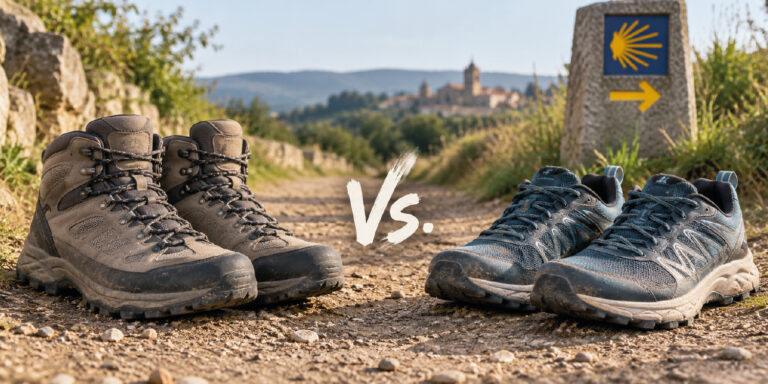
- Comfortable footwear: hiking shoes or trail shoes with good grip.
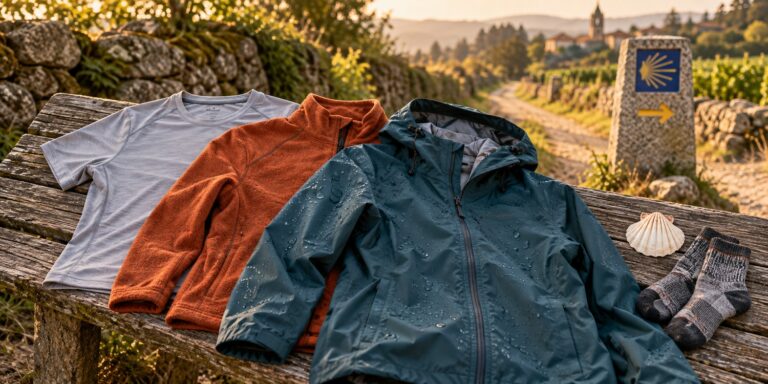
- Technical socks: they help manage moisture and reduce friction.
- Suitable clothing: light, breathable layers, plus a rain jacket.
- Sun protection: sunscreen, a hat, and sunglasses.
- Water and snacks: to stay hydrated and replenish your energy.
- First-aid kit: with adhesive bandages and supplies for treating minor wounds.
To round off your preparation, check out our packing list for the Camino de Santiago.
Where can you stay, and how do you get the Compostela?
Along the route, you’ll find pilgrim hostels, private hostels, guesthouses, and vacation rentals. In the summer, it’s a good idea to book ahead, especially in towns with fewer options.
To get the Compostela, pilgrims who walk the route must, as a rule, meet the minimum requirement of the last 100 kilometers of a recognized route and prove it with their pilgrim’s credential, in accordance with the established conditions.
You can check the current requirements on the official website of the Pilgrim’s Office.
Tips for walking the Portuguese Coastal Way in comfort
Before you set out, go on a few training walks with the shoes and backpack you plan to use. That way, you can spot any discomfort and adjust your gear.
During the pilgrimage, keep a suitable pace, take regular breaks, and drink water throughout the day. If you feel friction on your feet, don’t ignore it, as it can lead to blisters. To prevent this, also see our guide on how to avoid blisters on the Camino de Santiago.
Also, set aside some time to explore the towns you pass through. The experience isn’t just about reaching Santiago; it’s also about the scenery and the people you meet along the way.
Conclusion: Is the Portuguese Coastal Way worth it?
The Portuguese Coastal Way is an interesting option if you’re looking for a pilgrimage with Atlantic scenery, contact with nature, and cultural discovery. With a well-planned itinerary, the right gear, and stages suited to your fitness level, you’ll be able to enjoy the experience with greater peace of mind.