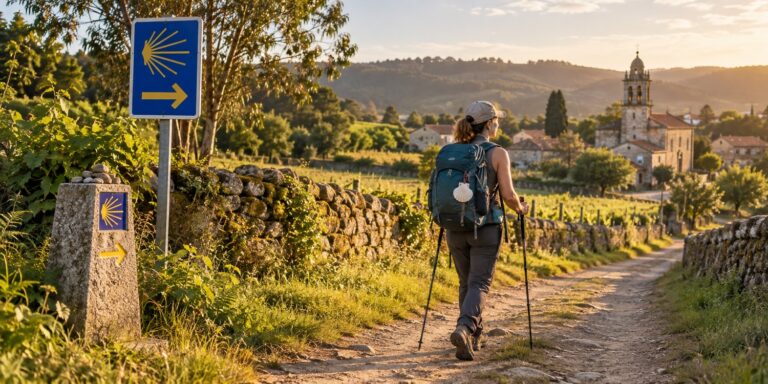

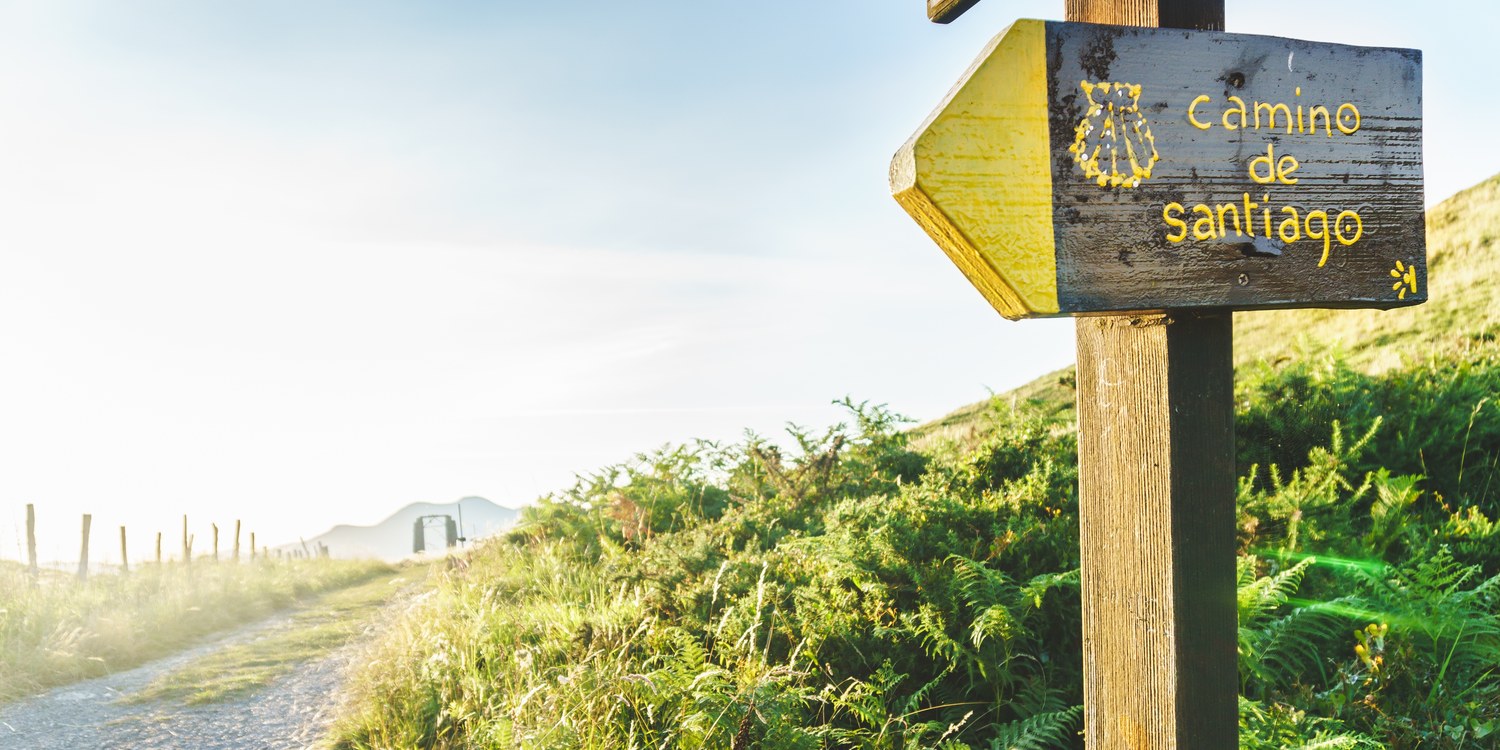
The Camino de Santiago combines discovery, adventure, and a connection with nature. Of the many options, the Senda Litoral stands out for its Atlantic landscapes, its seaside boardwalks, and the coastal towns along the route.
If you’re planning this pilgrimage, familiarizing yourself with the stages and the main points along the way will help you organize your trip and enjoy each day at your own pace.
Table of Contents
What is the Senda Litoral?
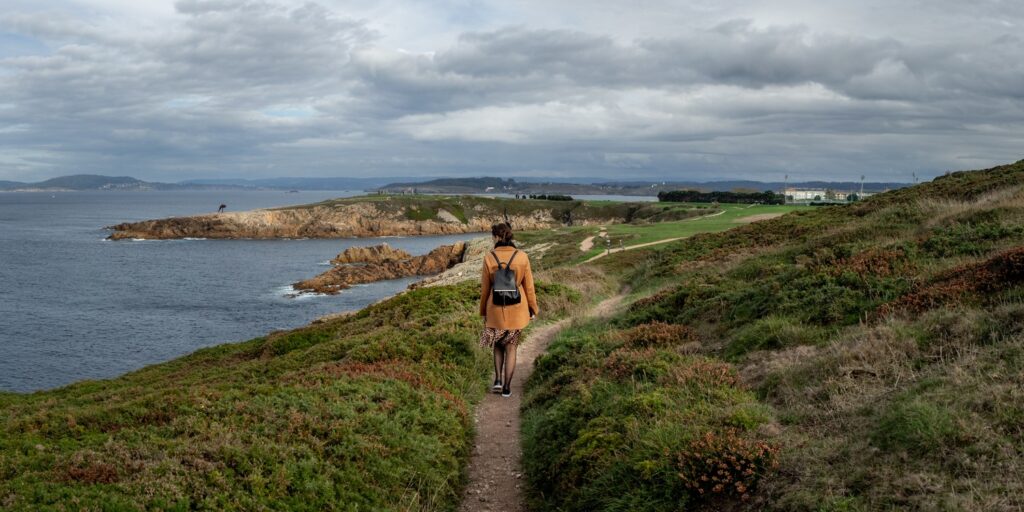
The Senda Litoral is a variant of the Coastal Way that favors the stretches along the ocean. Along the way, you’ll find beaches, boardwalks, fishing villages, and historic town centers.
The route can begin in Porto, passing through Matosinhos, Vila do Conde, Póvoa de Varzim, Esposende, and Viana do Castelo. After arriving in Caminha, you can cross the Minho River and continue along the Galician coast to Santiago de Compostela.
Although many sections are relatively flat, the cumulative distances and weather conditions can make some stages challenging.
What are the stages of the Senda Litoral?
How the stages are divided depends on each pilgrim’s pace and where they choose to spend the night. One possible way to organize the route is as follows:
1. Porto – Vila do Conde
The walk starts in Porto and continues through Matosinhos and Leça da Palmeira, past seafront areas and beaches. Vila do Conde is a good place to end the first day.
2. Vila do Conde – Esposende
The route passes through Póvoa de Varzim and coastal towns such as Apúlia before reaching Esposende, near the mouth of the Cávado River.
3. Esposende – Viana do Castelo
This stage combines natural landscapes and small villages. In Viana do Castelo, take the opportunity to explore the historic center and enjoy the views of the Lima River.
4. Viana do Castelo – Caminha
The route continues through coastal and natural areas to Caminha, where you can get ready to cross the Minho River into Galicia.
5. Caminha – A Guarda
Once in Spain, the route passes through A Guarda, a coastal town known for its natural scenery and the archaeological heritage of Mount Santa Trega.
6. A Guarda – Baiona
The walk continues along the Galician coast, passing through Oia and its Cistercian monastery, before arriving in Baiona.
7. Baiona – Vigo
The route runs through coastal and urban areas to Vigo, where you’ll find a range of useful services to help you recharge.
8. Vigo – Redondela
This stage links Vigo and Redondela, where the coastal variant joins the Portuguese Way.
9. Redondela – Pontevedra
The route passes through rural areas and over the historic bridge at Ponte Sampaio before reaching Pontevedra, known for its old town.
10. Pontevedra – Caldas de Reis
The landscape is characterized by rural paths and small towns. Caldas de Reis is a good place to stop and rest after a day’s walk.
11. Caldas de Reis – Padrón
The route passes through villages and green areas on its way to Padrón, a town with strong ties to the tradition of the Camino de Santiago.
12. Padrón – Santiago de Compostela
The final stage takes pilgrims to Santiago de Compostela, where they can celebrate their arrival and visit the cathedral and the historic center.
This breakdown is only a guide. Distances and stops vary depending on the itinerary you choose, so be sure to confirm the route before you set out.
Read also: Albergues vs. hostels: how to choose on the Camino
When is the best time to walk this route?
Spring and early fall are good times to walk, with milder temperatures. In the summer, the days are longer, but the heat and sun exposure require extra precautions.
In the fall and winter, rain and wind can make the walk more difficult. So be sure to check the weather forecast and pack gear appropriate for the season you’ve chosen.
How should you prepare for the stages of the Senda Litoral?
Good preparation helps prevent unexpected problems and makes the experience more comfortable. Before setting out, keep a few essential points in mind:
- Plan your distances: tailor each stage to your physical condition.
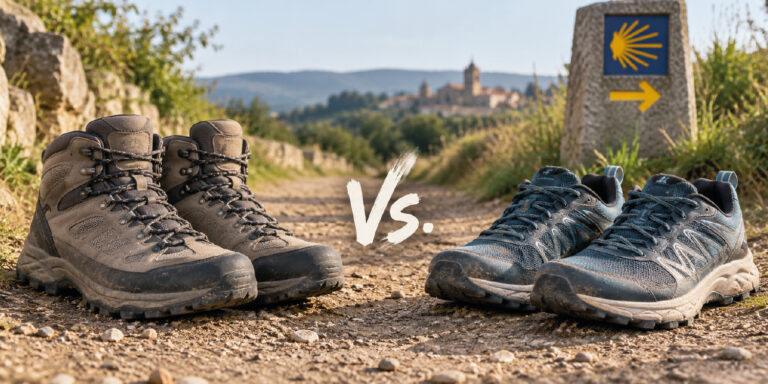
- Choose comfortable shoes: wear a pair you’ve tested on long hikes.
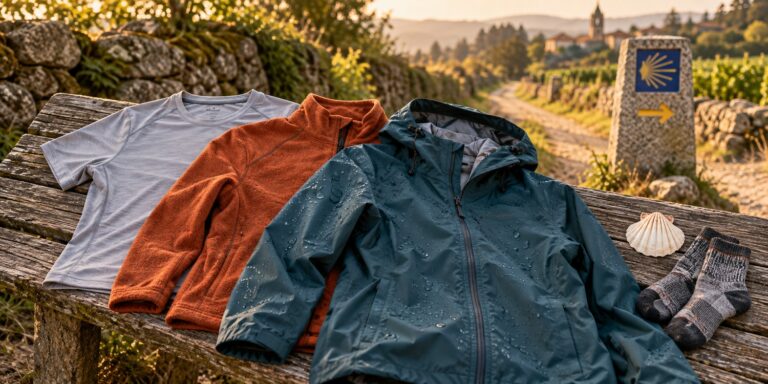
- Pack appropriate clothing: opt for lightweight, quick-drying items, and don’t forget a rain jacket.
- Book accommodations: especially in summer and at peak travel times.
- Pack your backpack: take only what you need to avoid carrying too much weight.
Also check out our packing list for the Camino de Santiago and our guide on what to wear on the Camino de Santiago.
Is the Senda Litoral worth choosing?
If you love the sea and coastal scenery, this variant lets you discover different towns in Portugal and Galicia, with the Atlantic by your side on many stretches.
Even so, you shouldn’t underestimate the physical effort involved. The distances, the wind, and the different types of terrain require preparation and a pace suited to your abilities.
The important thing is to enjoy the experience at a leisurely pace, appreciating the scenery, the people, and the moments that are part of the pilgrimage.
Buen Camino!