Good preparation is what transforms the Camino de Santiago into an experience to savor, rather than an effort to endure. It’s not just about training the body: preparing for the Camino also means choosing the right route, planning the journey, testing your equipment, and fine-tuning your mind. The better prepared you are, the more relaxed you walk and the more you enjoy each stage. We’ve gathered the best ways to arrive at your starting point ready to experience the Camino at your own pace.
Table od Contents
Physical preparation: start walking early
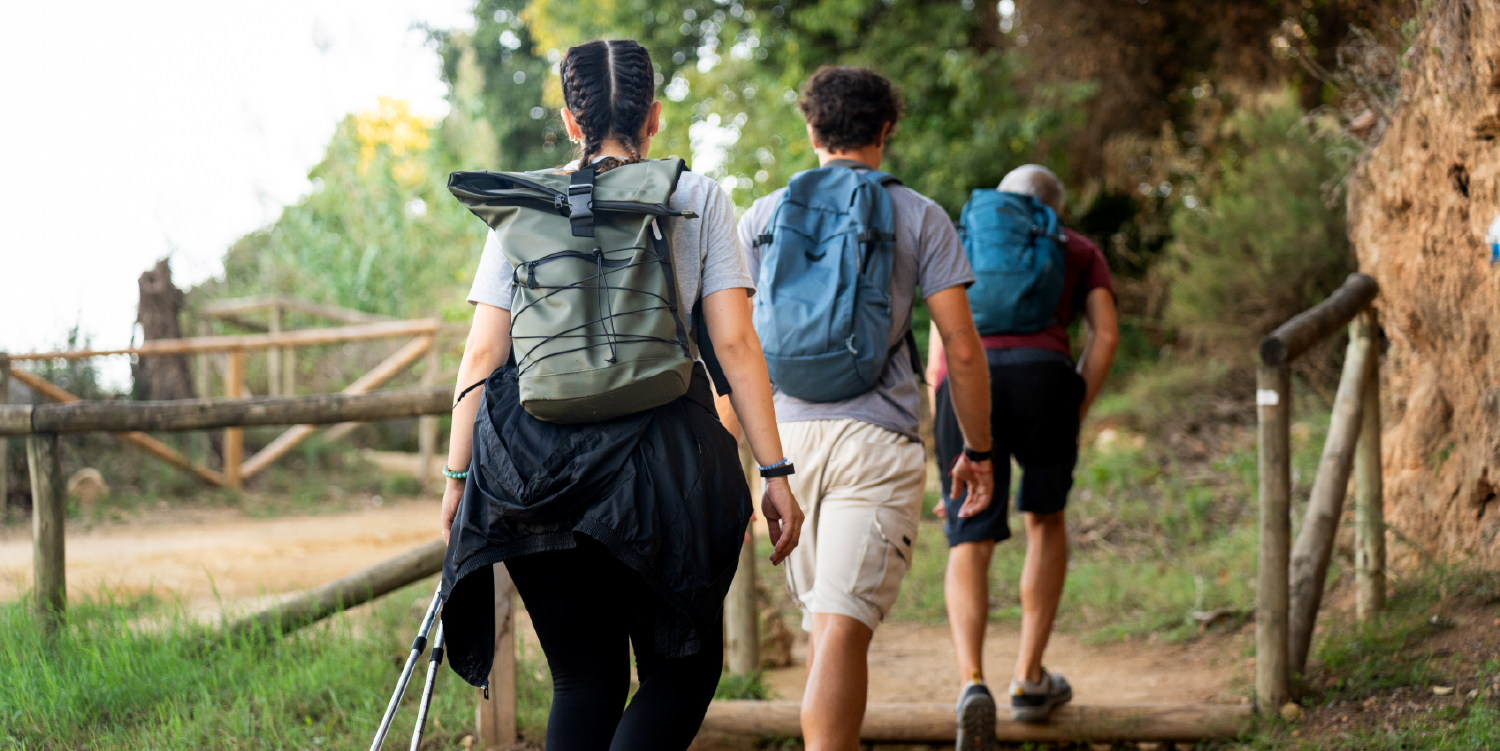
The body needs time to adjust to the effort of walking for several days in a row, so physical preparation should begin weeks or months before the event. It’s not necessary to train like an athlete, but rather to create the habit of walking regularly and gradually increase the distance and difficulty.
Start with short walks and gradually add kilometers. Include routes with ascents, descents, and uneven terrain, similar to what you will encounter. As the date approaches, train with the backpack you will be carrying and with a weight similar to the actual weight, so your body can adapt to the load. Consistency is more important than intensity: walking frequently prepares you better than doing a single very demanding workout.
Choose the right path and route
There are several routes to Santiago de Compostela, and choosing the one that best suits you is an essential part of the preparation. The French Way is the best known and has the most services and pilgrims. The Portuguese Way and the Portuguese Coastal Way are very popular with those starting from Portugal. There is also the Northern Way, the Primitive Way, the English Way and several others, each with its own character, difficulty and landscape.
Choose based on the time you have available, your physical condition, and the type of experience you are looking for – more social or more relaxed, easier or more challenging. You don’t need to do the entire route: you can walk just a section, or the last 100 kilometers, which is the minimum to receive the Compostela certificate. Researching the options will help you make the right decision for you.
Plan the steps and dates
After choosing the route, define your travel plan. Start by deciding on the time of year, keeping in mind that spring and autumn usually offer milder temperatures and fewer crowds, while summer brings a lot of heat and winter, colder temperatures and rain. If you are going to do the Portuguese Way, you can consult our guide on the best month to leave.
Next, see how many days you have available and divide the route into realistic stages, adjusted to your pace, and not just the traditional ones. It’s preferable to walk fewer kilometers per day and enjoy it than to force distances that leave you exhausted. Also, leave some room for unforeseen events and, if possible, include one or two rest days. A good plan provides security, but maintain some flexibility to adapt the route along the way.
Take care of the practical aspects and the paperwork
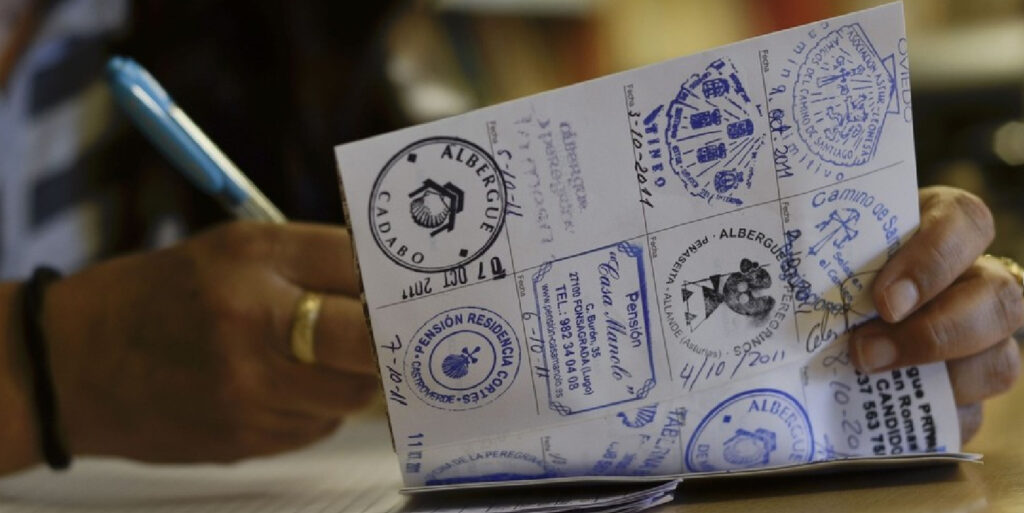
There are practical details that should be sorted out in advance to ensure a rested journey. The most important document is the pilgrim’s credential, which is stamped along the route and gives you access to hostels and, at the end, to the Compostela. Make sure to obtain it before you leave.
Also prepare your personal documents, such as your citizen card or passport, and ensure health coverage through the European Health Insurance Card or travel insurance. Make a rough budget for the days you will be walking, including accommodation, meals, and unforeseen expenses, and carry some cash, as not all places accept cards. Sorting this out calmly avoids last-minute surprises.
Choose and test the equipment in advance
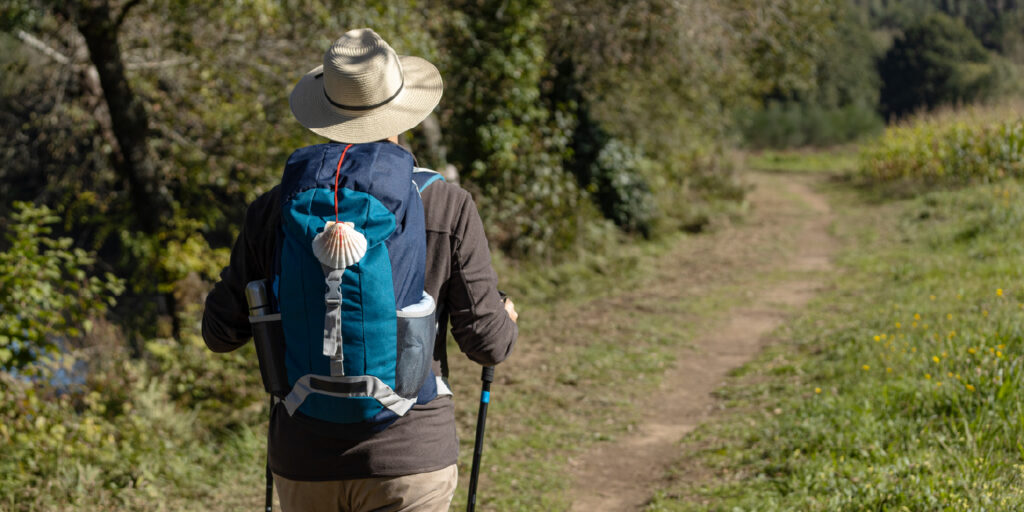
The right equipment makes all the difference, but it’s useless if you wear it for the first time on the first day. The most common mistake is buying everything at the last minute and setting off without having tried anything on. Footwear, in particular, should be well broken in and tested on several walks before departure.
The same applies to your backpack, which should fit snugly against your back, and to technical clothing and socks, which you should try on during training. Use training sessions to fine-tune everything, discover what works, and correct what bothers you while you’re still at home. Arriving on the Camino with your equipment already broken in is one of the best ways to prevent discomfort and injuries. To make sure you don’t forget anything, also check out our guide on what to pack in your backpack.
To make sure you don’t forget anything: A guide on what to pack in your backpack.
Take care of your feet now
Your feet are your means of transport on the Camino, so they deserve attention from the very beginning of your preparation. In the weeks leading up to it, moisturize your feet daily to strengthen the skin, trim your toenails straight across without cutting them too short, and get used to wearing the technical socks you will be taking with you.
Use your training sessions to identify where your shoes create friction and what your most sensitive points are—those that usually cause blisters. This way, during the Camino, you can protect them preventively and react quickly to the first signs of discomfort. Well-prepared feet prevent many of the pains that spoil the experience for so many pilgrims.
Prepare your mind as well
Preparing for the Camino isn’t just physical, it’s also mental, and this part is often forgotten. You’ll spend many hours walking, sometimes alone, tired, in the heat or rain, and things don’t always go as planned. Preparing your mind for these moments helps you experience them with serenity.
Reflect on your motivations and what you expect from this journey, whether it’s a challenge, reflection, spirituality, or simply disconnecting from routine. Approach the Camino with patience and without rigid expectations, accepting that there will be more difficult days. This inner availability is what often distinguishes those who suffer on the Camino from those who enjoy it, even in the less easy moments.
Get your body used to hydration and nutrition
Good hydration and nutrition habits can also be trained. Get into the habit, even during your training, of drinking water regularly and eating a balanced diet before and after exercise. Discover which snacks give you energy and are good for you, such as fruit, nuts, or bars, so you can take them with you on the Camino.
Pay attention to how your body reacts to exertion, what you need to eat, and how often you need to replenish your energy, thus avoiding energy crashes during the stages. Arriving at the Camino with these habits already formed makes the walk more stable and safer.
Learn about the Way
Knowledge is also preparation. Taking the time to research your route will give you confidence and help you avoid many unforeseen problems. Find out about the stages, where there are hostels, water sources, pharmacies, and places to eat, and which sections are the most challenging.
There are guides, maps, apps, and pilgrim communities with a wealth of useful and up-to-date information, as well as accounts from those who have already completed the route. If the Camino passes through areas where you don’t speak the language, learn some basic expressions to make daily life easier. The more informed you are when you start, the more peacefully you will walk.
Preparing well for the Camino de Santiago essentially means taking care of all aspects of the journey: your body, logistics, equipment, and mind. Start early, proceed calmly, and test everything before setting off. This way, you’ll arrive at the starting point confident and ready to experience the Camino to the fullest.
Buen Camino.