Retirement brings something that has been scarce for years: time. And for many, that time comes accompanied by a long-postponed dream: to walk the Camino de Santiago. If you are one of those people, the good news is that this is probably the best time of your life to do it.
More availability, more patience, more ability to be present at each stage. Of course, there are specific considerations for those who want to do the Camino de Santiago after the age of 60, and that’s exactly what we’re talking about in this article.
Table of Contents
Why is retirement a good time to do the Camino?
The time pressure that exists in working life disappears. You can walk at your own pace, stop whenever you want, extend a stay in a village that has captivated you, or simply rest for an extra day without feeling like you’re “holding anyone back.”
According to a 2018 study by the Association of Friends of Santiago de Compostela, most pilgrims over 65 significantly adapt their stages, preferring to walk between 12 and 18 km per day, well below the 22 to 25 km that is the average for younger walkers. And this is not a limitation: it is wisdom.
Before you leave: what to do in advance
Consult a doctor
This step is not optional. From the age of 60 — and even before — it’s important to have a complete check-up and get approval from your family doctor before embarking on a journey of this caliber. Not out of pessimism, but out of responsibility.
Research and simulate the route
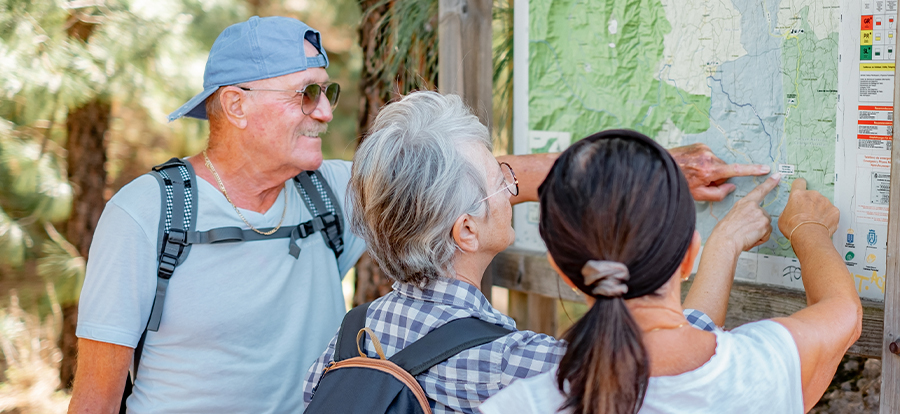
Take some time to study different starting points, read accounts from other senior pilgrims in online forums and groups, and simulate the first stages with maps and guides. The more you know the terrain before you get there, the more relaxed you will feel when you arrive.
Test the backpack at home
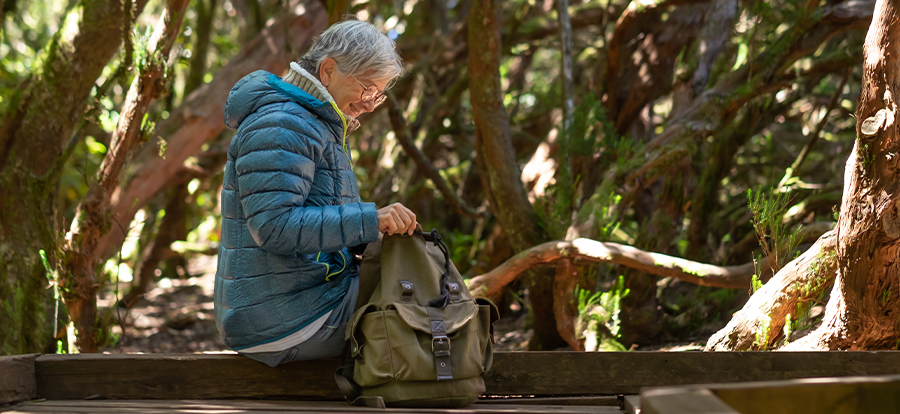
Before setting off, take 2-3 hour local hikes with your backpack loaded. This is the only way to see if the weight is right, if your footwear is suitable, and if your body responds well to the exertion.
Inform your family and friends
Tell your family and close friends what you plan to do. Share the planned steps and keep in regular contact along the way, both for your safety and for the peace of mind of those who stay behind.
How to choose a starting point
There is no single answer to this question. The ideal starting point depends on your health, available time, preferences, and hiking experience.
For senior pilgrims, it is worth taking into account some specific factors:
- Accessibility in transport – Choose a starting point with good train, bus or car connections, so that the arrival is simple and stress-free.
- The first few kilometers – Carefully analyze the elevation gain and difficulty of the first stages. Starting with a technically demanding route can be discouraging right from the start.
- Accommodation options – Make sure there are accommodation options that suit your pace and needs along your chosen route.
- Possibility of adjusting stages – Choose routes that allow you to shorten or adapt each day as you feel, without being “stuck” in an overly rigid plan.
How to plan steps
The first week is the most important
Keep the first stages short, under 15 km. The body needs time to adapt, and forcing the pace right at the beginning is the main cause of injuries that force pilgrims to abandon the Camino prematurely.
Arrive at your accommodation early, get plenty of rest, and don’t hesitate to postpone your itinerary for a day if you feel you need to. The Camino is not a place to rush.
Plan some days off
The repeated walking day after day is exhausting in a way that those who haven’t experienced it tend to underestimate. Including full rest days in your planning isn’t a sign of weakness; it’s the strategy that allows you to keep going. Take advantage of these days to visit villages, monuments, and small treasures that the Camino places along your route.
Ask for help when you need it
There is a support service, often called a “broom wagon,” that picks up pilgrims who need a rest or who are unable to complete a stage. Using it is not giving up: it’s having the common sense to take care of your body so you can continue in the following days.
How long should I stay away?
This is one of the questions that most worries first-time travelers. The good news is that there’s no single right answer: it depends on you!
A week is an excellent way to test yourself, especially if you’ve never done anything like it before. For a senior pilgrim, completing 80 to 100 km in a week comfortably is already a very enriching experience. It’s also good preparation for a longer walk in the future.
Two weeks will allow you to find your rhythm, which usually stabilizes after the first seven days. At the same time, you’ll be able to combine hiking with sightseeing and rest without feeling pressured.
Three to four weeks is the full experience. The body adapts, the mind slows down, and there’s a shift in perspective that many pilgrims describe as transformative. It’s enough time to truly feel that you’ve lived differently.
What should I pack in my backpack?
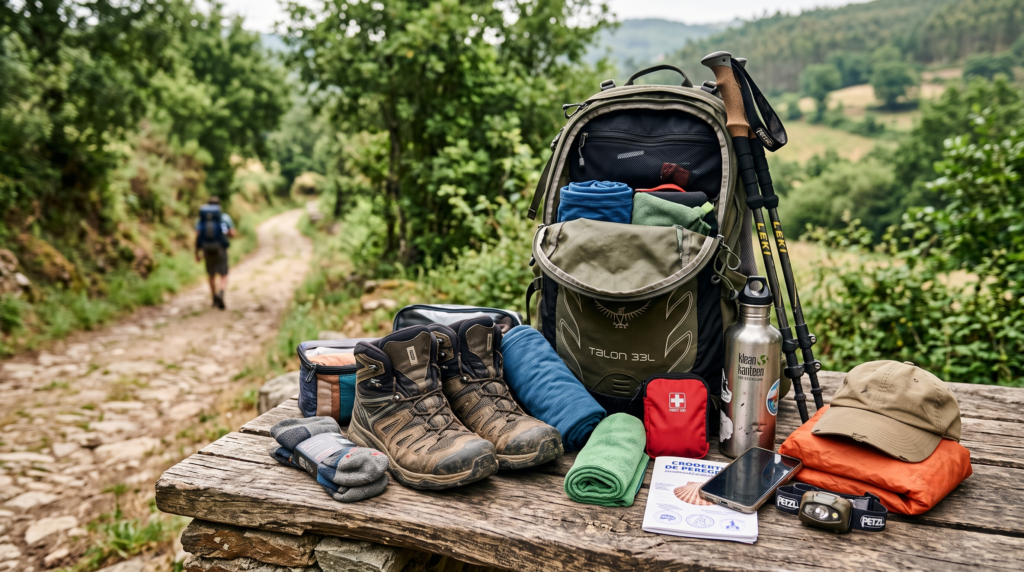
The rule is simple: the bare minimum. For senior pilgrims, this is even more important. Every extra kilo on your back translates into additional fatigue and a greater risk of injury.
Along the Way you will find everything you need: places to eat, sleep, shower and wash clothes. You don’t need to create a “portable world” on your back. Take the essentials: lightweight technical clothing, first aid kit, raincoat, appropriate footwear and your pilgrim’s credential, and leave the rest at home.
The Camino de Santiago doesn’t have a wrong starting point. It begins wherever your heart and legs take you. Many senior pilgrims only do six or seven stages, and create memories that last a lifetime.
The most important thing is not to go far or to go fast, but to have the courage to take the first step.